Showing posts with label Steven Spielberg. Show all posts

Sunday, April 1, 2018

READY PLAYER ONE: Game On

NOTE: All your SPOILERS are belong to us.

"People come to the OASIS for all the things they can do, but they stay for all the things they can be."

- Wade Watts/Parzival (Tye Sheridan), Ready Player One 


Very few people ruled the 1980s like Steven Spielberg. He directed eight films and through his production company Amblin, executive produced sixteen more - those including Gremlins, The Goonies, InnerspaceYoung Sherlock Holmes, Who Framed Roger Rabbit and of course, Back to the Future. He also created the television series "Amazing Stories" which helped give rise to storytellers like Brad Bird. Someone that prolific on popular culture could never be forgotten and thanks to the work of a budding screenwriter-turned-author (and back again), it might have actually been the foundation of one of his most thrilling adventures.
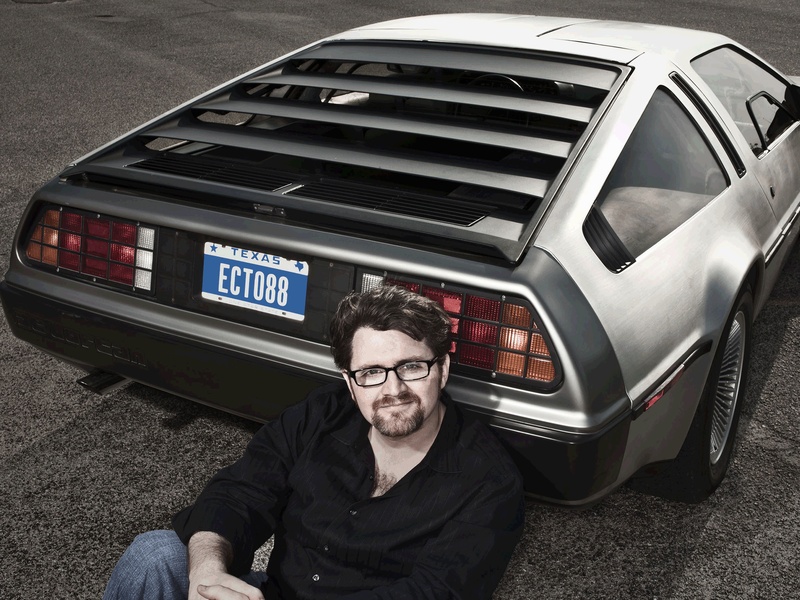


Ernest Cline was a fledgling screenwriter whose most famous work had been the 2009 comedy, Fanboys, starring Kristen Bell and Dan Fogler among others. He was not satisfied as the movie was being distributed by future bankrupt monstrosity the Weinstein Company. Wanting to do a movie-style adventure with complete control over his characters, Cline began writing the book "Ready Player One", an ode to the pop culture of the 1980s as well as a hopeful look forward into a future filled with virtual reality havens of escapism. While the book garnered praise from many in the geek community, others were disquieted. "Ready Player One" has often been railed as sexist, manipulative and pandering. A recurring element is the lead character asking if another character portrayed as a woman is actually a woman. Another controversial part of the book was the amount of listing the lead gives to his knowledge of the 1980s. Cline has offered few if any defense to these allegations. He had been mostly busy working to get "Ready Player One" a proper film adaptation. Many of the great filmmakers around today were offered the film - Peter Jackson, Matthew Vaughn, Edgar Wright and Robert Zemeckis among them - and all turned the film down. On a lark, Cline's agent sent the book to the offices of Steven Spielberg just to see if he would turn it down. Spielberg apparently not only did not turn the book down but could not put the book down.


Having recently fallen into the groove of making socially-relevant historical dramas, Spielberg found the book giving him flashbacks of making films back in the 1980s, the ones that were literal blockbusters with fans lining up around the block. He also saw the story as a potential commentary on the youth of today willingly plugging themselves into their various devices as opposed to spending time outside or with friends and family. Suitably inspired, Spielberg shocked Hollywood by announcing Ready Player One as part of his upcoming filmography which then featured the international thriller Bridge of Spies and cutesy-cuddly family film The BFG. He even attended Comic-Con, of which he has made few appearances at, to promote the film to cheering crowds. "It was the most amazing flashback and flash forward I had ever expierenced," he told Comic-Con. Utilizing the performance capture technology of The Adventures of Tintin and The BFG, Spielberg set out to bring the virtual reality world of the OASIS to life. Because of the lengthy time it took for Industrial Light & Magic to fully render and animate the world of Ready Player One, Spielberg found time to go off and film The Post, following the tumultuous election of Donald Trump. Having scratched the familiar historical drama itch, Spielberg was Ready to have fun with audiences again.


In the not-too-distant future of 2045, young Wade Watts (Tye Sheridan) finds himself wishing for a world that no longer exists: the seemingly more fun and upbeat time of America in the 1980s. Fortunately, he has a way to access that in the sprawling digital utopia that is the OASIS, created by multi-billionaire genius James Halliday (Academy Award winner Mark Rylance). In the OASIS, even the most unpopular nobody can go anywhere, do anything, be anything. However, Halliday has been dead for several years but before he died, he left behind a message inviting all users of the OASIS on a hunt for an Easter egg he left behind. The first user to find it will inherit Halliday's vast, vast, VAST fortune (vast) as well as full ownership of the OASIS. In the midst of this is the multinational conglomerate known as IOI, headed by the duplicitous Nolan Sorrento (Ben Mendelsohn), which will do anything - legal or illegal - to win the contest. As the hunt for the Egg rages on, the realms of the real and the virtual hang in the balance. Wade and his friends - through their digital avatars - will go on adventures beyond their wildest "pure" imagination.


Ready Player One is one of the most visually-stimulating, jaw-droppingly awesome and incredible hilarious action-packed thrill rides Spielberg has ever brought to the screen. The OASIS sequences, as previously mentioned filmed in performance capture, are proof that Spielberg has become the de-facto champion of the technology, picking up where Zemeckis and Jackson left off. It has all the prowess that James Cameron imbued into Avatar, but with the crowd-pleasing sensibilities of films like Jaws and Raiders of the Lost Ark. All the heroic characters - the High 5 - are likable both in their digital avatars as well as in their real-world selves. Mark Rylance and Simon Pegg, who are both fantastic actors and Spielberg alumni, are well-suited in supporting roles. The standout performance comes from the British actress Olivia Cooke as Samantha/Art3mis, utilizing an American accent, and often brings to mind Lea Thompson's giggly Lorraine Baines from Back to the Future


In the book, one of the challenges for Parzival is to step into the world of the 1983 film, WarGames. WarGames is a fine film, one I would definitely recommend; but it is clear that the film held no personal connection to Spielberg himself. However, The Shining did; it is well-documented that Stanley Kubrick was very close friends with Spielberg. In the movie, our heroes burst through the doors of a digital cineplex to find a stunning recreation of the Colorado Lounge in the Overlook Hotel. It is almost as if the filmmakers went back in time to Elstree Studios in 1979 England and simply filmed in the empty sets. Hallmarks of The Shining gradually begin to appear: the Grady twins, the blood coming from the elevator (it usually gets off at the second floor) and last, but not least, the infamous Room 237. It is a testament to Spielberg's command of visual effects, the mind-blowing talent of thousands of animators as well as a loving tribute to a masterful director. 


The greatest joys to get out of Ready Player One are the surprise references in the film. It is amazing to think that Freddy Krueger, Duke Nukem, Harley Quinn, the original RoboCop and Chucky of Child's Play are all in a Steven Spielberg film. And that is barely skimming the surface of what can be seen in the film. I saw this movie in IMAX both opening night and the following night and I can only imagine I have correctly identified just under a third of all what goes on in the background of the movie. While I will most definitely advocate you see this film on the biggest screen possible, the day will come when people like me will go frame-by-frame of this movie on an iPad Zapruder-style to see all the identifying characters.  But the one that captured my heart the most was seeing the DeLorean time machine back in action. Seeing it zoom, jump and hover in the film's first challenge was exhilarating. There is also a very sweet nod to Robert Zemeckis in the film as well that is one element I will not spoil.


I am recommending Ready Player One to anybody I know. Regardless of age, gender, whether they are gamers or whether they love movies or not. It is a genuinely heartfelt adventure that will please almost any crowd you put in front of this thing. It celebrates imagination and fun like few movies made today ever could have. The flaws of the book have been dialed down or even removed from the film. Spielberg has often taken books that were mediocre at worst and made them into legendary films like Jaws and Jurassic Park. I imagine time will be just as kind to Ready Player One.

Wednesday, March 28, 2018

My Top 10 Favorite Steven Spielberg Films

Note: Just in time for Ready Player One.


There is no living filmmaker who has changed the world like Steven Spielberg. His literal “household name” is synonymous with movies. Starting in the mid-70s, Spielberg has brought wonder and amazement to the theaters again and again and again. Picking your personal favorites out of the intimidating and unmatched filmography of his is not an easy challenge. Mine is made out of films that I return to more often than others. Now, naturally there are omissions, and I will explain them.

A. E.T. the Extra-Terrestrial is not on this list. That is not an oversight. Do not misunderstand me, I do honestly enjoy this movie and it is an unarguable masterpiece. However, sticking it in the top 10 is what everyone would do. I wanted this list to include a few heavy hitters and some that people might not recognize at first glance.

B. 1941 is not on this list, but it is not because it is a bad film. It is a much maligned film for many reasons but it is not the abject failure it has been made out to be over the years. Give it a chance if you have never seen it and only heard its unfair reputation. Contrarily, Schindler’s List is not on this list and is a great film but is an extraordinarily hard one to watch.

C. There is only one Indiana Jones film on the list. Crystal Skull is the worst of the bunch but it too suffers from an over-exaggerated reputation.

D. Hook is not on this list. Get over it, fellow ‘90s kids. The BFG is better.

E. The Spielberg films I have not seen as of this writing are The Color Purple, Empire of the Sun and Munich. Their omissions are simply because I have yet to see them in their entirety; something I hope to rectify very soon. Ready Player One, too, but that goes without saying because it is brand-new. If all I have read, seen and heard are correct, it definitely deserves a spot on this list.

With all that out of the way, on with the list. Feel free to comment, but please be civil.


"You know what my husband said about the news? He called it the first rough draft of history. That's good, isn't it?"

10. The Post (2018)
Cast: Meryl Streep, Tom Hanks, Sarah Paulson, Bob Odenkirk
Written by: Liz Hannah and Josh Singer
The most recent film on this list is one of Spielberg’s strongest. Boasting an incredible cast that includes reuniting actors who have previously worked together (i.e. David Cross and Bob Odenkirk from “Mr. Show”, Sarah Paulson and Bruce Greenwood from “American Crime Story: The People v. O.J. Simpson” among others) as well as the first pairing between screen icons Meryl Streep and Tom Hanks. Naturally, they play off each other well as Streep plays the optimistic owner of the Washington Post, Katherine Graham and Hanks plays the wry curmudgeon editor-in-chief Ben Bradlee. When the “Pentagon Papers” come into play threatening Richard Nixon’s presidency, Bradlee and Graham join forces with some courageous reporters to print them in the Post, despite facing certain prison time. Of course, this story has very obvious modern-day parallels which is why Spielberg wanted to make it (and make it quickly). It has some of the longest takes I have seen in a Spielberg movie, where he and longtime cinematographer Janusz Kaminski excel at capturing the tense situations on-screen. Ultimately, it is no spoiler where this story ends, but it is exciting to see that the final shot of this film nearly matches one of the opening shots of All the President’s Men, which can be considered a pseudo-sequel to this film. Spielberg and Hanks have proven themselves a formidable team time and time again and with the notable performance of Meryl Streep (who earned yet another Oscar nomination), The Post shows that freedom of the press is a weapon worth fighting for.


"We're just on our way to Sugarland to pick up my boy Langston."

9. The Sugarland Express (1974)
Cast: Goldie Hawn, William Atherton, Michael Sacks, Ben Johnson
Written by: Hal Barwood and Matthew Robbins
From the most recent to the very first Spielberg film, the master filmmaker debuts in American cinemas with a high-octane, rollicking adventure drama/comedy inspired by a true story. A young woman, Lou Jean Poplin (Hawn) breaks her estranged husband, Clovis (Atherton; soon to be forever known as Walter Peck from Ghostbusters) out of pre-release prison to obtain their young baby after the State of Texas deems Lou Jean an “unfit mother”. After hitching a ride with an elderly cornpone couple, the Poplins get caught in a high-speed chase and end up hijacking a straight-laced police officer at gunpoint. With a legion of brother officers hot on their tail, Lou Jean and Clovis try to survive their lengthy journey across the state of Texas on their mission of mercy as they quickly become heroes of the common people. Without Goldie Hawn’s participation in the film, Spielberg would never have gotten the director’s chair in the first place. Though she is most well known for comedy, she demonstrates a remarkable balance between laughs and tears in this film. Particular note is given to Michael Sacks, the hapless policeman caught up in the middle of the Poplins’ chase. He has an interesting arc in the film – at first, he is duty-bound and most definitely not on their side, but by the end of the film, he has come to see them as people and does not want to see them get hurt. There is brilliant cinematography in the film with the cars on the road with the characters inside; a great example is the sequence where Clovis and Captain Tanner are first discussing terms of their hijacking. It is all filmed in one take as the camera careens around both sides of the car. While the film does not have a happy ending for the main characters, it was only a happy beginning for Steven Spielberg.


"You know your own future, which means you can change it if you want to."

8. Minority Report (2002)
Cast: Tom Cruise, Max von Sydow, Colin Farrell, Samantha Morton
Written by: Scott Frank and Jon Cohen
After fulfilling his duties to his good friend Stanley Kubrick and finishing A.I., Spielberg got to do his own, un-tethered take on the future with the writings of Blade Runner author Philip K. Dick. Tom Cruise plays police captain John Anderton of the Pre-Crime Unit, a special agency that can predict and prevent crimes from happening. At the same time a nosy investigator (Farrell) questions the integrity of such an idea (“We are arresting people who have broken no law”), Anderton finds himself the prime suspect in a murder that will happen in less than 48 hours. In order to clear his name, he goes on the run with one of the three Pre-Cogs, a young woman named Agatha (Samantha Morton) who has never seen the outside world. While he protects her and searches for the truth, Anderton must face a terrible tragedy from his past and question what he might be capable of if pushed to his limits. The first real Spielberg film of the new millennium showcases a future not as fanciful as Back to the Future Part II but more realistic than Blade Runner. The mystery is quite thrilling and the action is spot-on. There is even a bit of gross-out humor in the film, almost a throwback to the dinner scene in Temple of Doom. If there is a weak spot in the film, it comes down to the very end of it. Without giving anything away, it is very out of tone with the rest of the film and could come off as schmaltzy. Still, Minority Report is a very compelling thriller with enough action and political intrigue to keep you watching and keep you guessing.


"James... Earn this. Earn it."

7. Saving Private Ryan (1998)
Cast: Tom Hanks, Tom Sizemore, Edward Burns, Barry Pepper
Written by: Robert Rodat
Perhaps the second most emotionally difficult film for Spielberg following Schindler’s List, the film’s opening is among the most heart-pounding and visually arresting sequences in all film history – the recreation of the Allies storming Omaha Beach. There are many reports of veterans of World War II having to exit the theater during this scene – it was too much for them to take, particularly the sound design when the soldiers drown underwater. The film continues on with Tom Hanks as Capt. John H. Miller leading a group of soldiers on a mission to rescue a young man (early Matt Damon) whose three brothers have already died in the line of duty. There are causalities to be sure, but the characters do not die in vain. Spielberg received a second Oscar for Best Director and dedicated it to his father who served in World War II (and would later help to inspire Bridge of Spies).


"Now get this! Comic books! He reads comic books! Barry Allen is The Flash!"

6. Catch Me If You Can (2002)
Cast: Leonardo DiCaprio, Tom Hanks, Christopher Walken, Amy Adams
Written by: Jeff Nathanson
After the heady dark themes of both A.I. and Minority Report, Spielberg took the opportunity to lighten up a bit as he directs this breezy adventure based on the almost literally unbelievable true story. Frank Abagnale Jr. (DiCaprio) is a bright young man whose world collapses around him following his parents’ divorce. Having inheriting the gift of gab from his father (an Academy Award-nominated Christopher Walken), Frank decides to take on several different identities and the high life that comes with them – including a pilot, a doctor and a lawyer. Hot on his heels, however, is a determined FBI agent (Hanks) chasing after him to bring to justice. This is yet another Spielberg film with an absolute dynamite cast; DiCaprio apparently was very sick during the making of the film but his self-confidence as Frank is effervescent. It also marks one of the first major films of Amy Adams, who was clearly a movie star from the start. John Williams’ main title theme matched with the hypnotic animated opening is simply the best. Catch Me is a nice treat to have if you have just been subjected to bitter herbs of darker stories.


"You care about something, you fight for it. You hit a wall, you push through it."

5. The Adventures of Tintin (2011)
Cast: Jamie Bell, Andy Serkis, Daniel Craig, Simon Pegg
Written by: Steven Moffat, Edgar Wright and Joe Cornish
Steven Spielberg was reading the initial reviews came out for Raiders of the Lost Ark in France and he kept coming across the word "Tintin" in the papers. He had scant knowledge of French from high school, but when the translation was brought to him, he discovered a series of comic books about a young adventurer named Tintin, who traveled across the globe much like Indiana Jones but with a more comedic bent. Naturally, Spielberg was hooked on the story but could not fathom a way to bring the inimitable artwork of Hergé to life. That is, until, over 20 years later when Spielberg met Lord of the Rings director Peter Jackson on-stage at the Oscars presenting him with Best Picture for The Return of the King. Spielberg soon discovered another Tintin acolyte in Jackson, who suggested creating the world of Hergé through performance capture. Intrigued by the technology, Spielberg agreed with the provision that Jackson accompany him as producer. The resulting film is, as Spielberg described it, "unapologetic, shameless adventure", written by "Doctor Who" showrunner Steven Moffat and Hot Fuzz collaborators Edgar Wright and Joe Cornish. The film has a rousing momentum that rarely stops and Spielberg shows his amazing control of perfomance capture and pushes it to its limits in a standout chase sequence all done in one shot. Spielberg and Jackson set off to make three films, the latter two of which have not been made but if there is any chance that they will happen (and recent reports indicate they might), I will gladly be there on opening day.

"Mr. Hammond, I think we're back in business!"

4. Jurassic Park (1993)
Cast: Sam Neill, Jeff Goldblum, Laura Dern, Richard Attenborough
Written by: Michael Crichton and David Koepp
When Michael Crichton first pitched his novel to him, Steven Spielberg called Jurassic Park “the most genius combination of science and imagination”. Another combination of science and imagination is visual effects, which took a gigantic leap forward with the computer-generated dinosaurs in the film which were complimented by the real-life mechanical dinosaurs created by Stan Winston. During a once-in-a-lifetime meeting with the legendary Ray Harryhausen, Spielberg showed him a test of digital dinosaurs running through a film and Harryhausen declared, "Well, there's the future." The lead characters are memorable and actually stand a good chance against the dinosaurs though they are not your traditional action heroes. Spielberg throws in his trademark characters who cannot deal with the idea of parenting; specifically one Dr. Alan Grant, played by Sam Neill with a decent character arc. The movie spawned two sequels (with only one directed by Spielberg) and a soft reboot with a sequel on the way later this year. 


"I saw something last night that I can't explain!"

3. Close Encounters of the Third Kind (1977)
Cast: Richard Dreyfuss, Teri Garr, Melinda Dillon, François Truffaut
Written by: Steven Spielberg
In the 1970s, two very different news stories were being propagated frequently in the media: Watergate and UFOs. Both had theories thrown around about, mundane and fantastical. As far as Steven Spielberg was concerned, all the negative stuff going on Earth meant the stars were the limit. In all the movies he directed with Richard Dreyfuss starring, he purposefully casts him in the character that Spielberg sees himself as: in this case, Indiana lineman Roy Neary. After coming into contact with beings not of this world, Neary becomes obsessed with finding out the truth of they are here. At the same time, famed scientist Lacombe (Truffaut) is pursuing evidence all around the world of extraterrestrial life and bizarrely, keeps coming across the same five musical notes. The paths for both men end at the intimidatingly-named Devil's Tower in Wyoming. The last third of the movie culminates in a very sweet and heartfelt ending. In one of the three different versions of the movie, John Williams composes a stirring and almost tear-jerking take on "When You Wish Upon a Star" from Disney's Pinocchio (a movie that comes up in dialogue early in the movie). Late last year, Columbia Pictures put the movie out in theaters again for its 40th anniversary (as well as shilling for a new Blu-Ray and 4K release). It actually did well enough that Columbia's initial one-week-only engagement was bumped up to two weeks. That shows you the power a Close Encounter can have.

"This shark, swallow you whole."

2. Jaws (1975)
Cast: Roy Scheider, Richard Dreyfuss, Robert Shaw, Lorraine Gary
Written by: Peter Benchley and Carl Gottlieb
If there is one movie that has launched the careers of multiple modern-day directors, it has to be this one. And really, who can blame them? For all the trouble Spielberg and company had to endure with drunk lead actors, an unpredictable ocean to film on and a recalcitrant robot shark, it has perhaps the sweetest happily-ever-after of a cinematic afterlife that is possible. From the line "You're gonna need a bigger boat" to the iconic theme, Jaws has encompassed almost all pop culture. It spawned three lesser sequels, a popular theme park ride at all Universal parks that no longer exists, as well as video games and even a fan documentary on the film's Blu-Ray. Despite the film's reputation for being terrifying, it has a lot of slow, meaningful moments: the tearful Mrs. Kinter confronting Chief Brody, the brief sequence of Brody and his youngest son silently playing together and, of course, Quint's famous "U.S.S. Indianapolis" speech. To paraphrase actor Michael J. Fox, "[Jaws] is everything you go to movies for." 


"I don't know, I'm making this up as I go."

1. Raiders of the Lost Ark (1981)
Cast: Harrison Ford, Karen Allen, Paul Freeman, Ronald Lacey
Written by: Lawrence Kasdan
I know I said I was not going to put 1941 on this list, but it is an important film. Without its (seemingly) epic failure, Spielberg would not have needed a project to prove himself on. George Lucas, Spielberg's long-time friend, had just the project: a full-blown throwback/love letter to the rough-and-tumble adventure serials they had both grown up on with the greatest hero of them all who was then-named Indiana Smith (Spielberg agreed to direct on the condition the character's name be changed). At the time, Spielberg was on the outskirts of Hollywood to the point where he was filming the movie overseas (a first for him). John Landis was filming An American Werewolf in London. Joe Dante was filming The Howling. John Carpenter was filming Escape from New York. These films are all memorable and fine in their own right, but only one topped them all in the same year. A movie with Nazis, ghosts, Hitler-loving monkeys, thousands upon thousands of snakes, and the Ark of the Covenant; as well as the role Harrison Ford will forever be known for - Indiana Jones. It continues to define the action/adventure genre and inspired countless knock-offs (some decent, some awful). Harrison Ford was once asked what his definition of Indiana Jones is: "I think the audience likes a character who is both an academic and an adventurer.... It's his tenacity, his unwillingness to give up, his zeal for the hunt. And the pleasure that he takes in going to amazing places, seeing bizarre and amazing things and solving the mysteries that lay before him." 

So there it is, my personal top 10 favorite Steven Spielberg movies. It definitely took a lot of time - re-watching the movies, thinking about them, reading on what Spielberg himself and others had said about them - and it is a list I am willing to stand by. I hope you enjoyed reading it and please share if you did!

Friday, June 12, 2015

JURASSIC WORLD: 14 Years in the Making

NOTE: Spoilers in review are bigger than they appear.


“They’re dinosaurs. Wow enough.”

- Owen Grady (Chris Pratt), Jurassic World

There is no franchise that the ‘90s can claim its own more like Jurassic Park. In 1993, Steven Spielberg, master of entertainment, brought back dinosaurs for modern day audiences with the help of author Michael Crichton, creature creator Stan Winston, stop-motion expert Phil Tippett, visual effects supervisor Dennis Muren and the countless geniuses at Industrial Light and Magic. Jurassic Park is a billboard among signposts of popular American cinema. The Lost World: Jurassic Park, Spielberg’s follow-up, is more of a flashing “Welcome to Las Vegas” sign – all flash, pure cash. Jurassic Park III is a “Have you seen my dog” poster (with all due sincere respect to Joe Johnston). From that film’s release in 2001 (maybe too late after Lost World from 1997), many have wondered in the interim years when and where a new chapter would come.


But that new chapter would come after the deaths of two of Jurassic Park’s main collaborators: Michael Crichton and Stan Winston. Original producer Kathleen Kennedy speculated that after Crichton’s death, it would not be respectful to go forward with a fourth film. Universal saw differently. After her appointment to Lucasfilm (and bigger fish to fry), Kennedy left Amblin Entertainment where Spielberg was developing a fourth film in secret and only announced its existence during The Adventures of Tintin’s panel at Comic-Con in 2011. Spielberg would not return to direct and would turn over directing duties to newcomer Colin Trevorrow, director of indie darling Safety Not Guaranteed. Spielberg had only three stipulations for the plot: there had to be a functional Jurassic Park with countless guests, a trainer attempting to domesticate raptors and a newer, bigger dinosaur breaks loose and wreaks havoc. None of the original films’ stars – Sam Neill, Jeff Goldblum and Laura Dern – were asked or even seemed interested in returning to the franchise that made them movie stars. With an untested director working on his first big-budget film, a cast of new stars, and the main director of the franchise sitting at the top, fans awaited with great anticipation, hoping for the best and fearing the worst.


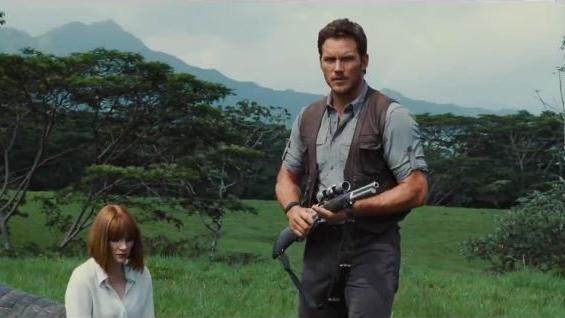
22 years after the initial inspection of the Isla Nublar theme park failed miserably with the deaths of several people, John Hammond’s dream has finally come true and Jurassic World has opened to the public. The park’s head of operations Claire Dearing (Bryce Dallas Howard) has two nephews – Zach (Nick Robinson) and Gray Mitchell (Ty Simpkins) – visiting the park for the first time but she is too busy to see them so she turns them loose on the park. Meanwhile, Navy-trained raptor keeper Owen Grady (Chris Pratt) is trying to keep his bonded raptors out of the greedy hands of InGen security leader Vic Hoskins (Vincent D’Onofrio) when the newest attraction of the park – the genetically modified Indominus Rex – breaks free from containment. Now with thousands of civilian lives at stake, including Zach and Gray’s, Claire has to team up with Owen to save the future of Jurassic World.


While the film in closer to the tone of the original Spielberg film than its two predecessors, it often falls into feeling like a million-dollar fan film than a normal sequel. Jurassic World shifts from the awe and majesty of the genetically reborn animals to big crashes and explosions of what you see normally today. The pacing is really fast and you do not get to really explore the characters like Spielberg did. If you watch the trailers, you are given as much information about the characters as you do in the final film. In fact, the final film itself plays out as a much longer of the trailer (aside from an admittedly cool dinosaur fight climax). Chris Pratt sells me as an action hero, but strangely does not utilize his strong sense of humor that won him over to audiences in Guardians of the Galaxy (even though the on-set videos of him feature his natural smile-inducing charisma). He is clearly auditioning to take over for Harrison Ford as Indiana Jones while he knows Spielberg is watching; and if this film is any indication, yeah sure he would be fine. There is just simply no development of characters like Alan Grant, Ian Malcolm, Ellie Sattler and John Hammond. Bizarrely, the only character from the original film to be reprised is Dr. Henry Wu (Slappy and the Stinkers’ B.D. Wong; I did not make up that title, go look it up) who has a second-act dark side turn that is not really explained and eventually just disappears via a helicopter. The main antagonist (there really are no real villains, nobody wants people to be killed by dinosaurs) is Vic, who basically wants InGen to take back control of the island so they can turn the animals into “living weapons”. His opportunity to give a big, bad-guy “Greed is good” speech is comedically interrupted by his death at the jaws of a raptor.


However, the biggest plus I can give this film is selling me Jurassic World as a physical location. It seems like a real theme park complete with snicker-provoking product placement like Margaritaville (apparently Jimmy Buffett himself can be seen in viral videos for the film and a song of his is on the soundtrack), Starbucks, Brookstone and might possibly be the first film shown in IMAX with an in-film IMAX theater. Not sure if that’s a bad thing or not, just something funny to be noticed. Speaking of funny stuff to be noticed: Jimmy Fallon shows up as himself via a ride video explaining “how nothing can go wrong” when things are about to go wrong as does Jake Johnson, of “New Girl” and Let’s Be Cops, the good-guy version of Wayne Knight’s Dennis Nedry to be the comic relief of the film because Chris Pratt refuses to do so. The two brothers in the film are well cast but they often have to deal with problems that we hear about but do not see. A common mantra from screenwriters to modern-day films is echoed here: “Show, don’t tell.” This is a multi-million dollar movie, not a stage play.


Ultimately, if you have seen the trailers and like what you see, you will definitely enjoy Jurassic World – it stands on what it delivers. If you are looking for the successor to Spielberg’s original, you won’t find it here. It is its own genetically diversified mutation and one is thankful it does not hit you over the head with references to the original film as some modern-day sequels are want to do. Trevorrow has already said he will not return for a sequel that this film will undoubtedly give birth to.

UPDATE: An earlier version of this review had a suggestion for Trevorrow's next film to be the remake of the classic '80s Disney film, Flight of the Navigator. Twitter friend, ComingSoon.net writer and all-around super cool guy Edward Douglas brought to my attention this interview in which Trevorrow says he is no longer involved in the film. And as I surmised, it is probably due to the financial failure of Tomorrowland and Disney being more in-favor of live-action remakes of their animated classics, Marvel Cinematic Universe films and Star Wars films.

Sunday, January 29, 2012

TWILIGHT ZONE: THE MOVIE – Tales of Terror

RETRO REVIEW


In 1956, Rod Serling created the famous television series entitled “The Twilight Zone”. The series combined the genres of fantasy, science-fiction and horror with an occasional sense of macabre tongue-in-cheek humor. The show’s immense success was attributed to the chilling stories written by acclaimed writers like Richard Matheson, memorable guest stars William Shatner, Burgess Meredith, and Cliff Robertson and of course, the “often imitated but never duplicated” monotone of host Rod Serling. The series went on to inspire young people to tell their own stories. Four of those people were Steven Spielberg, John Landis, Joe Dante and George Miller. In 1983, they came together to direct four pieces of a tribute of sorts to “The Twilight Zone”. What followed were laughs, screams and a horrible tragedy that irrevocably changed one man’s life forever. This was the feature-length film entitled Twilight Zone: The Movie.


The film starts with Creedence Clearwater Revival kicking in with “The Midnight Special” as two guys (Dan Aykroyd and Albert Brooks) are driving along a mountain road jamming along to the song. As their tape gets eaten in the radio, they despair until the driver (Brooks) plays with his passenger (Aykroyd) by turning out the car’s headlights driving in darkness. After a few minutes, the driver and the passenger start playing a trivia game where they guess TV theme songs. At this point, audiences in 1983 were asking themselves if they had walked into the wrong movie. They each give a few guesses (including “Sea Hunt”, “Car 54, Where Are You?”, “National Geographic” and “Hawaii 5-0”) before their conversation turns to the infamous TV show “The Twilight Zone”. The two men talk about their favorite episodes when the passenger playfully asks the driver, “You wanna see something really scary?” Obliging, the driver pulls over while the passenger gets in the back seat. After a few seconds, the passenger turns around having transformed himself into a monster and attacks the driver. Cue: “The Twilight Zone” music. It’s an absolutely gorgeous way to start a “Twilight Zone” movie by having fun with the audience, reminding them of the source material and of course, scaring them out of the wits. It’s sad that this is the only time that Aykroyd and Brooks are onscreen together; they both have a great comedic rhythm. It’s also the only “good and un-tragic” thing that John Landis contributed to this film. What came next is hard to ignore.


After the main title, the film’s narrator (original “Twilight Zone” star Burgess Meredith) tells the John Landis written-and-directed story of malevolent chauvinist William Connor (Vic Morrow) who after a racist slur-ridden tirade is suddenly thrown back in time to 1939 Nazi Germany where he is attacked by Nazis believing he is Jewish; then, he is dumped into the Deep South in the midst of the Ku Klux Klan who are preparing to lynch him as a black man; he soon finds himself in the middle of a Vietnam warzone being shot at by US troops (with a nice nod to Landis’ Animal House thrown in). Connor is pulled back into 1939 Germany where he is detained and forced onto a train with Holocaust victims which pulls away, never to be seen again. This section of the film gets most of the attention when people talk about Twilight Zone: The Movie. During the production of the film, Landis blatantly broke the law to get two child actors to perform with actor Vic Morrow on set with a dangerous stunt involving a helicopter that ended up killing all three of them. The ensuing trial effectively crippled Landis’ career (though it is not completely responsible for where he is today) and ended his friendship with Steven Spielberg, who was nearly implicated himself. Taking that aspect of the film out of it, I feel that this segment was too punishing for audiences, almost “A Christmas Carol” without the most important element: redemption (which is what Landis had planned with his ill-conceived helicopter stunt). The next segment of the film would have to be infinitely lighter in tone to keep from the audience being emotionally disconnected.


The film’s second segment (a remake of “Kick the Can”) directed by Steven Spielberg features a mysterious man named Mr. Bloom (Scatman Crothers) who comes to a retirement home to bring new life to the place in more ways than one. He convinces the others to join him at night for a game of kick the can. During the game, the senior citizens suddenly revert back to childhood – literally. While they are initially overjoyed and have a lot of fun, they soon begin to worry about what will happen to them. They find that being kids again isn’t all they wanted it to be so they ask to be returned to their normal ages. Mr. Bloom leaves them by telling them to stay their own age but keep “fresh young minds”. After some very big features, I don’t think Spielberg was able to pull off a 15-minute segment in this film. Ron Howard eventually tried a similar concept with better results – Cocoon. Unlike most people, I like Scatman Crothers – his playful enthusiasm is infectious. As a kid, I grew up with him as “Hong Kong Phooey”. It wasn’t until years later that I found out he was in classic films like The Shining. Still, I really do like the score by Jerry Goldsmith in this segment, although it – like the rest of the segment – doesn’t really fit the tone of the rest of the film. However, the next filmmaker up at the Twilight Zone bat would pull off the weirdest and creepiest segment of the film.


Joe Dante, hot off the hit The Howling, remakes one of the classic “Twilight Zone” episodes, “It’s A Good Life” about a young woman in transit, Helen Foley (Kathleen Quinlan) who comes across a young boy named Anthony (Jeremy Licht) who is not what he seems. He has a “loving” family (including the bad guy from Innerspace as his Uncle Walt and Nancy Cartwright as his sister Ethel, who would later become none other than Bart Simpson). As the night progresses, Anthony’s magical demands become more and more frightening to the point where he wishes Ethel into the television set where she is eaten by an evil cartoon dragon. Eventually, Anthony tires of his “family” (which is really made up of people he’s tricked into coming to his house) and wishes them all away, leaving just him and Helen. Helen suggests that he try to develop his power to help people instead of horrifying them and that she will stay with him to assist him. This is Dante unrestrained and a perfect example of his love of “Looney Tunes” (which is constantly on in the TVs in the house). He also showcases a lot more of the eerie elements of the film with transforming a simple bunny rabbit into a hideous monster and pulling a cartoon demon out of the TV. Unlike the actual episode, this segment has a more “happier” ending with Helen and Anthony driving off into the sunrise with flowers blooming around them. I believe this was the first time that composer Jerry Goldsmith worked with director Joe Dante, beginning a collaboration that wouldn’t end until Goldsmith’s death in 2003. Not to mention, of course, an appearance by long-time Dante actor Dick Miller (who is apparently in everything Dante directs). The last segment would be helmed by a relative newcomer, but it would be the highlight of the film thanks to an established actor.


The final segment is directed by George Miller of Mad Max fame (later to be known for directing the Happy Feet films) and is a remake of “Nightmare at 20,000 Feet” well known for featuring a notable performance by William Shatner. John Lithgow stars as John Valentine, a man who has panic attacks whenever he flies. As the flight attendants attempt to calm him down and return him to his seat, Valentine is fearfully reciting flight statistics. While the flight continues, Valentine looks out his window and sees a gruesome creature ripping open an engine. Screaming his discovery, everyone looks outside to find nothing. The flight attendants attempt to convince him that what he saw wasn’t real and offer him sedatives. Trying to get some sleep, Valentine hears a knocking at his window and opens it to find the gremlin sneering at him through the window. This sends Valentine into a frantic frenzy with people having to physically restrain him. The first officer of the plane assures him there is nothing wrong. The plane lurches and the passengers begin to panic, all preparing to die. Seizing an opportunity, Valentine grabs a gun from an FAA agent onboard and shoots through the glass window pulling him halfway out the window. The gremlin notices this and starts walking toward him. It grabs his face and playfully waggles its finger at him disapprovingly before it leaps away into the night. When the plane lands, a seemingly delirious Valentine is hauled away into a straightjacket. However, one of the ground technicians at the airport finds the damaged engine and that perhaps he might not be crazy. Down the road, Valentine is in the back of an ambulance laughing to himself and it is revealed that the driver of the vehicle is the passenger of the beginning of the movie. He plays “The Midnight Special” and ends the movie by jokingly asking Valentine, “Want to see something really scary?” This is probably my favorite out of all four segments mostly due to Lithgow’s performance because he smartly chose not to replicate Shatner’s infamous performance (though a nice little joke is made of it on Lithgow’s former series “3rd Rock from the Sun”). It even brilliantly ties back into the opening of the film and gives the audience one last laugh as soon as they see Dan Aykroyd again.


Anthology films don’t have the best track record in Hollywood; both New York Stories and Grindhouse underperformed at the box office. Most say it is because audiences don’t want to sit around and watch multiple stories; they would rather concentrate on one coherent narrative. However, I think Twilight Zone: The Movie was an interesting experiment to try and replicate the harrowing stories told in 1956. Sure, the helicopter tragedy that took the lives of Vic Morrow and two young actors overshadowed the film as a whole, but once people could see the whole film they would realize the stories were unique to each director. Landis wanted to teach lessons against bigotry, Spielberg wanted to keep hope in the minds of the elderly, Dante wanted to scare and appease audiences with a kid who had unlimited power and Miller wanted to depict how fear can rule our lives and make us irrational. Together these stories may not seem like they co-exist together but they’re interesting to watch on their own and that’s why I believe Twilight Zone: The Movie should get more recognition on its own terms.

Wednesday, January 4, 2012

Best of 2011

2011, as a whole, wasn't a great year. With 27 sequels, who could blame it? Certainly Hollywood needs some fixing, but I still think it has some life left in it. Why? Because these movies rose from the dark and gave me laughs, cheers and smiles. Here they are, my best of 2011

10. Real Steel


As I said in my review, this is Shawn Levy’s big breakaway from comedies into more serious territory. Nice guy Hugh Jackman delivers a fine performance as not-so-nice-guy Charlie Kenton. The boxing robot effects are great, a nice blend of practical effects and motion capture. For a much derided film, it builds its premise up fairly well.

9. The Green Hornet


It’s not the sturdiest of superhero movies, but it’s plenty better than another “Green” superhero (who would’ve guessed?). A film that pays respect to its predecessors in radio, comics and television while also working for a modern audience, Michel Gondry’s first major mainstream film swiftly mixes comedy and action. It’s got to be given props for coming up with some pretty outlandish set pieces – most done practically (such as the opening club explosion). It’s clear that Seth Rogen did his homework on all things Green Hornet, from the look of the Black Beauty to a small nod to the original Kato, Bruce Lee. The only nitpick I would have with it is that barely any of the characters are remotely likable. Also, I have never seen a worse candidate for an IMAX 3D film. I saw this in 3D, and I saw nothing that would be worthy of an IMAX 3D release. Absolutely nothing. If you saw it in IMAX, you have no soul.

8. Super 8


Ever since Iron Man 2, we were waiting on Super 8. J.J. Abrams’ first original film as director gets a lot of praise for being a great proponent of do-it-yourself filmmaking. The performances from the children are fantastic, not to mention Kyle Chandler. Where this film gets a lot of hate is the “half-hearted and uneven” depiction of the alien monster with unsympathetic goals. Personally, I’m a fan of Abrams’ films. I think he’s an interesting filmmaker to keep an eye on. The action and suspense were thrilling, especially the train crash sequence which was amazing. It seemed like much of the effects were done for real; for instance, the tipping bus. In the production design, Abrams masterfully recreates a Spielbergian town that looks truly authentic as though it had never been touched by modern times. In all, Super 8 is quality entertainment. It also shines a large and positive light on filmmaking, which I was very impressed with.

7. The Muppets


I know I’m gonna get a lot of flak for putting it so low on the list, but as I said in my review, I did enjoy the film. I just still could not get past the disappearing Muppets and the disappointing Amy Adams. Still, the songs were wildly enjoyable and the film’s bouncy bubbly enthusiasm will leave audiences of any age smiling. Jason Segal has done the impossible: bring the Muppets back from the brink and give them a film where they are again the stars.

6. Thor


For a superhero’s first depiction in film, Thor does leave some things to be desired that serves the purposes of linking to The Avengers but hopefully a sequel (if it can just stick to a director) will expand on the vast universe surrounding Asgard set up in this film. Chris Hemsworth shines as Thor, going from selfish to selfless perhaps a bit too quickly but believably. Although Natalie Portman is enjoyable in the film, her role isn’t particularly demanding. Everybody gives a lot of crap to the very pretty Kat Dennings and her comedy chops, but she wasn’t in the film enough to bug me. Anthony Hopkins is an inspired choice for Odin, but borderlines on over-the-top on some line deliveries. Who knows? Maybe Odin needs to be over-the-top. By far, the funniest Stan Lee cameo yet; I’m sure I was laughing louder than anyone else in the theater when he showed up. The sets are very well done, thanks to master production designer Bo Welch (who has a particular touch in his work). Kenneth Branagh does a fine job of directing, but has a much hated fascination with Dutch angles that many will be happy to see gone in Thor 2.

5. X-Men: First Class


One might think that because of the rushed production schedule that this film would be a studio controlled mess. On the contrary, this film appears to have been made by Fox throwing money at Kick-Ass director Matthew Vaughn and saying, “Money is no object. We trust you.” The cast -- in particular James McAvoy and Michael Fassbender -- is outstanding. Kevin Bacon plays a killer villain as eternally youthful Sebastian Shaw. The best part of the film is of course its pitch-perfect cameo of Wolverine played by Hugh Jackman (who, with this film, breaks Christopher Reeve’s previous record of most times playing a superhero). The period is used well to the film’s advantage but more recognizable songs would’ve been more appreciated.

4. Rise of the Planet of the Apes


When I heard this film announced, I predicted doom right from the start. I assumed Fox had lost their minds and were flogging a dead horse. Never in my moviegoing years have I been happier to be proven wrong. After the double fiasco of the Oscars and Your Highness (but a great cameo in The Green Hornet), this is precisely what James Franco needed -- a performance that allowed him to be subtle -- though the unarguable star of the film is Andy Serkis who brings performance capture to new heights. Evolving a technique initially used in bringing Davy Jones to life in the productions of the Pirates of the Caribbean sequels, Serkis performed the role of smart simian Caesar live on set. This helps to give excellent performances out of Franco and John Lithgow, whose enthusiasm is unbridled. I eagerly anticipate a sequel.

3. Drive


I enjoyed this film much more than Fast Five (not that it wasn’t good, just not as great as this film). As I said in my review, I will never underestimate Ryan Gosling as an actor ever again. He delivers a fantastic performance as the mostly silent Driver who is out for revenge after a heist gone wrong. It balances sweet scenes of the Driver driving through the sunset and the violence acts he has to incur to protect the ones he cares about. I’m not gonna say much more about it, but you can read my review and then go see for yourself. It’s a fantastic drama with action that doesn’t get over-the-top like Fast Five does.

2. Footloose


I can’t think of many critics who would have this film in their top 10 lists, much less top 3. But I’m not a critic (most of ‘em are cynical). I’m a movie buff and film optimist. This film gave me two of the greatest moviegoing experiences of the year. The first time I saw it was in July, when director Craig Brewer brought the film to town for a special sneak preview. I waited in line in front of a local DVD/Blu-Ray store at 8 AM, he came and brought donuts, recognized me BY NAME (nearly lost my $#*!) and handed out tickets. I drove over to the theater and waited across the parking lot outside of a Whole Foods Market sweating to death with only my laptop, a Mexican Coca-Cola and a small cup of Ben & Jerry’s. Finally, it came time to see the movie (before waiting in another line). Mr. Brewer came out to introduce it, told us some stories about how he was offered the movie and what the original Footloose meant to him. I saw it, I enjoyed it immensely. I thanked Mr. Brewer for the opportunity to see the movie early, got a picture with him and an autograph. Then came October 14th, when the movie was released to the general public. I didn’t have the money to go see it opening day, but I heard Craig Brewer was in town to open it up locally and I wanted to wish him good luck for the movie’s opening weekend. I went by the theater where he was, bumped into him and said good luck to him. He asked me if I was seeing the movie that night. I told him, I would love to, but I simply didn’t have the money. He says, “No problem,” and he hands me a free ticket. Cue exuberance. So I brought my laptop into the lobby, sat at a table and started writing while he’s signing posters and posing for pictures with people. After about two minutes with no one coming in, he comes over and sits down and we start chatting. Then, his phone rings. He says, “I’m sorry, I gotta take this.” He then looks at the screen and says, “Look who it is.” He shows me the screen and it says “Dennis Quaid”. Cue awesomeness. He gets to talking to him and I’m just sitting in awe. So, if it’s any correlation of the man to his film, Footloose is full of great times, well-performed drama and killer dance moves (for more specific info, please read my review).

1. The Adventures of Tintin


Steven Spielberg’s first foray in 3D makes for his most fun film in years. I’m not sure what got him on the kick of doing historical dramas and dark science-fiction pieces (with the occasional E.T. re-release and Crystal Skull thrown in), but it is so refreshing to see something so new and inventive from Spielberg. There was clearly a lot of care taken with the characters, the story and the partnership with Peter Jackson is unbeatable. See my full review.

Honorable mentions:
I hated to put these movies here, because they are very, very good, but I simply ran out of room in the top 10. By no means do these omissions mean I like them less or more than what is on the list.

Captain America: The First Avenger
The Tree of Life
30 Minutes or Less
Attack the Block
Source Code
The Girl with the Dragon Tattoo
Drive Angry


Worst movies:
Pirates of the Caribbean: On Stranger Tides
Green Lantern
The Smurfs
The Dilemma

Tuesday, January 3, 2012

THE ADVENTURES OF TINTIN: Steven Spielberg Gets Animated


Coming off the massive success of 1981’s Raiders of the Lost Ark, filmmaker Steven Spielberg was at the top of his game. He was reading glorious reviews from all around the world until a certain French newspaper review puzzled him. Unable to read French, he was trying to comprehend the meaning of the word “Tintin”, which was used several times in the article. With a translator, Spielberg discovered that the review was comparing the character of Indiana Jones and his globe-trotting adventures with a well-known European character named Tintin. He immediately asked to see what this Tintin was and was given several comic books of “The Adventures of Tintin”. These issues were also in French, but Spielberg fell in love with the artwork. He admired how even though he didn’t understand the language, the artwork could still tell the story for him.


Seeing a possibility of making an “Indiana Jones for kids”, Spielberg contacted Tintin’s creator Hergé. Because of Hergé’s declining health, Spielberg could not meet with him face-to-face, so they spoke only by phone. Spielberg detailed his enthusiasm for making a film adaptation of Hergé’s works but Hergé had his doubts. He had already tried to make an animated Tintin film by sending a letter to Walt Disney himself and received no response (there was never any confirmation that Disney read the letter). There were low-budget live-action Tintin films but they were not up to Hergé’s expectations. However, Spielberg intrigued him. Clearly, this was a man who got the clear idea of the character, expressed a love for the world depicted and would be true to the tone of the stories. Hergé gave Spielberg his blessing. Within months, Hergé passed away.


Spielberg began development of a Tintin film in 1983, planning to have Jack Nicholson play the irascible yet lovable drunkard Captain Haddock. Then, Spielberg realized something drastic: how could a real dog believably portray Tintin’s faithful companion Snowy? Snowy is meant to be a lot smarter than the average dog and would need to be able to express more thought. Faced with this prospect, Spielberg shelved Tintin until he met an up-and-coming New Zealand filmmaker named Peter Jackson. They met for the first time literally on stage at the Academy Awards when Spielberg handed Jackson the Oscar for Best Picture (The Lord of the Rings: The Return of the King). When he wasn’t watching the 1933 classic King Kong (which had a massive effect on him), Jackson had grown up reading the Tintin books. He too loved the artwork and understood the social satire and commentary within the adventures. After executive producing Jackson’s drama The Lovely Bones, Spielberg asked him if his effects company, WETA Digital, could make a digital Snowy for a live-action Tintin movie. Jackson shot test footage of himself “auditioning” for the role of Captain Haddock (in full costume) while being constantly upstaged by a dancing CG Snowy. Although Spielberg loved it, Jackson suggested that by making the film in performance capture (ala Gollum in The Lord of the Rings and King Kong in King Kong). Spielberg was initially wary – he had executive produced animated films like The Land Before Time, An American Tail and We’re Back!: A Dinosaur’s Story but never made one himself. To do an animated film, he would have to get rid of his beloved celluloid film. However, he was drawn to the technology because, as he said, “it would allow me to become more of a painter than ever before”.


Because of their collaboration and the amount of money it would take to make the film, Spielberg and Jackson had to bring together two studios -- Paramount (with Nickelodeon Movies, furthering Spielberg’s claim that Tintin was “Indiana Jones for kids”) and Columbia -- and shot the film in nearly 30 days (Jackson himself was there only for approximately 2 of those days; he oversaw the remainder of production in New Zealand at WETA Digital). Because Spielberg was an American making a Tintin film, he wanted the film to have a uniquely European voice so he hired three British screenwriters: Steven Moffat (show-runner of “Doctor Who”), Edgar Wright (Scott Pilgrim vs. the World, Hot Fuzz and Shaun of the Dead) and Joe Cornish (the much-praised Attack the Block). When Jackson finishes his two Hobbit films, he is supposedly ready to move into production of Tintin 2 and then Jackson and Spielberg are supposed to team up and co-direct Tintin 3, at which time the center of the Earth will crack open, the seas will boil and mountains will speak.


Tintin (Jamie Bell) is an intrepid young reporter who always gets himself into massive adventures by simply chasing a good story. He and his loyal dog, Snowy, are out shopping at a flea market when Tintin spies a model ship for sale. Immediately after purchasing it, Tintin is accosted by two individuals for possession of it, but he refuses to give it up. When he goes home, he uncovers a hidden scroll inside the ship that leads him to discovering the legend of the Unicorn (the real version of the model ship he purchased) and the hidden treasure it carried. Tintin gives the evidence to bumbling investigators, Thompson (Simon Pegg) and Thomson (Nick Frost). However, Tintin has put himself in the middle of a quest headed by the evil Sakharine (Daniel Craig) and is kidnapped and thrown onboard the captured ship of Captain Haddock (Andy Serkis), himself a prisoner. Haddock and Tintin team up to escape the ship and Sakharine’s clutches. Once free, Tintin realizes that Haddock is the last surviving descendent of the captain of the Unicorn. The scroll that Tintin has refers to a mystery that only Haddock himself can solve, but unfortunately is too reliant on alcohol and whiskey to keep his memory straight. Tintin, Haddock and Snowy travel the globe literally by plane, by sea and by land in order to stay one step ahead of Sakharine, unravel the mystery of the Unicorn and uncover the Haddock treasure.


In one movie, Steven Spielberg has shown a better handle of performance capture than Robert Zemeckis has in three (it hurts to say). Zemeckis used performance capture to reinvent stories we all know. Spielberg uses performance capture to bring to life ambitious artwork and also move the camera around in ways that would be impossible in live-action. This is Spielberg’s most visually insane movie; in a good way. There is a whole entire action sequence that mirrors the bike chase in Indiana Jones and the Last Crusade, but practically does it all in one take and involves a tank, a dam and chasing a hawk. It’s incredibly massive and complex but visually exciting to watch. It’s good to see that Andy Serkis, who has been getting massive (and much deserved) praise after his performance as Caesar in Rise of the Planet of the Apes, has a more playful role here as Captain Haddock. His delivery is quite funny and his movements are fantastic. He also gives a great monologue to Tintin about not letting failure define who you are.


Many have claimed that this is Spielberg’s “apology movie”, after the dismal fan reception of Indiana Jones and the Kingdom of the Crystal Skull. They like that Spielberg has teamed with Peter Jackson rather than the “evil” George Lucas. While I would agree that this film is better than Crystal Skull, Indiana Jones as a character is larger than just one movie. He’s certainly a better character emotionally than Tintin. Tintin is a bit bland, running mostly on enthusiasm. We don’t know a thing about him, how he became a reporter, who his family is. We’re just introduced to him, although the nice Catch Me If You Can-esque title sequence tries to explain visually what he does and the type of adventures he’s pulled into. Granted, you could say the same thing about Indy in Raiders of the Lost Ark, but he’s given a much broader scope. Harrison Ford is charming (back in the day when he wasn’t Mr. Grumpy Gills), intelligent and tough. I know it’s not quite fair to try to compare a legend like Ford to an up-and-coming actor like Jamie Bell, but if people are making the Indiana Jones connections they need to set the record straight.


Still, Tintin is quite an enjoyable film. It’s certainly Spielberg’s most genuinely fun film in quite a while. It’s good to hear John Williams back in action who apparently only does scores for Spielberg and Lucas nowadays. After the disastrous results of Mars Needs Moms, it took a master to make a much derided evolving technology get some respect from the film community (not to mention WETA’s work on Rise of the Planet of the Apes). I can’t wait to see more from the team of Spielberg and Jackson.

Tuesday, November 22, 2011

SPACECAMP: Huntsville, We Have A Problem

RETRO REVIEW


In the news recently, NASA has announced that they are reopening positions for astronauts. There had been some discussion as to whether or not manned space missions were economically feasible. It seemed that unmanned missions would be safer and more cost effective. But by removing humans from the equation, the space program seemed like a thing of the past until earlier last week. Children today need to grow up believing that they too can be astronauts. Who cares if they don't get to be? It won't hurt them to dream. Movies like Star Wars and Star Trek inspire young ones to want to go out and explores those galaxies far, far away and the final frontiers. All it takes are dreams. This is the message of SpaceCamp.


SpaceCamp stars Kate Capshaw (Willie Scott from Indiana Jones and the Temple of Doom and Steven Spielberg’s wife) as a wannabe astronaut who gets stuck training teenagers at the famous Huntsville, Alabama facility. Among them is the arrogant yet somewhat likable jerk Kevin Donaldson (Tate Donovan of “Glee”, “Gossip Girl”, Nancy Drew and The Pacifier; most famous as the voice of Disney’s Hercules), the ambitious Kathryn Fairly (Lea Thompson, hot off the hit Back to the Future and soon to be “not hit” Howard the Duck), the geeky Rudy Tyler (Larry Scott of Revenge of the Nerds), the vapid Tish Ambrosé (Kelly Preston of The Last Song, Old Dogs, Sky High, Dr. Seuss' The Cat in the Hat and John Travolta’s wife) and of course, the Star Wars-loving kid who just can’t relate (I know the feeling) Max Graham (Leaf Phoenix, who later grew up to become Oscar-nominated prankster of the world Joaquin Phoenix).


So that we know the players, we can go on with the story. All the teenagers cannot work together as a team and quickly become the laughingstock of SpaceCamp. Max ends up meeting a sentient robot named JINX (voiced by master voice artist Frank Welker). JINX is NASA’s “$27 million handyman” but has the unusual problem of taking humans’ orders too literally. JINX overhears a tearful Max desperately wishing he was in space after an argument with Kevin ends up shattering everything he loves about Star Wars. While the group is exploring a not-flight-ready Space Shuttle just before an engine test, JINX hijacks a computer and causes an engine malfunction that forces Launch Control to ignite the rocket boosters in order to avoid a crash – sending the trainees into space. Now out of orbit and options, they must work together to get back home.


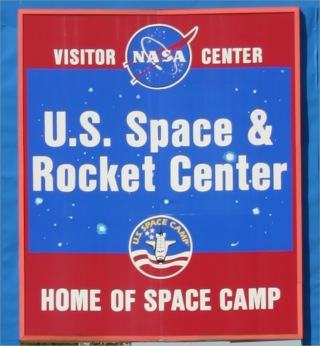
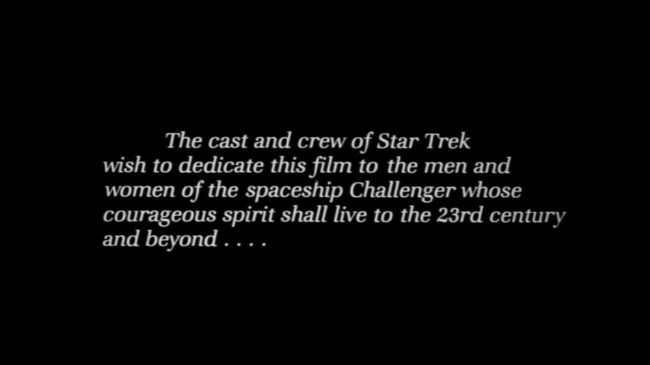
While most people would think a movie called SpaceCamp would be an extended commercial for the actual SpaceCamp, it really isn't. Yes, there are training montages going around the facility and its uses. But at the actual SpaceCamp itself (where I have been many times), there is no mention of the film whatsoever. Strange, right? Well, the biggest bruise that SpaceCamp ever got was 1986 - the same year that the real-life Challenger tragedy occurred. Americans simply did not want to watch a film about a Shuttle mission gone haywire. SpaceCamp had suffered a case of "Too Soon?". However, another film released the same year, Star Trek IV: The Voyage Home (which ironically, had a similar premise of "The adventure of their lives will be getting back home") paid tribute to the fallen astronaut heroes by beginning their film with this message:


SpaceCamp is for the kids that couldn't go to SpaceCamp. It fell out of popularity, mostly because it also has fallen out of availability. This is why I think it ought to be re-released on DVD/Blu-Ray on this occasion of astronauts returning to space so that kids of all ages can once again reach for the stars.