Showing posts with label George Miller. Show all posts

Tuesday, November 21, 2017

JUSTICE LEAGUE: Identity Crisis

NOTE: Faster than a speeding SPOILERS!


"It's good to see you playing well with others."
"May be temporary."

- Commissioner Gordon (J.K. Simmons) and Batman (Ben Affleck), Justice League (2017)


Outside of the failed Dark Universe, there is perhaps no other cinematic universe that has been tied to Hollywood's whipping post quite like the DC Extended Universe. Starting with 2013's Man of Steel, DC has been trying its damnedest to catch up to the goldmine that is the Marvel Cinematic Universe. Zack Snyder, director of comic book adaptations like 300 and Watchmen, was put in the director's chair and while early trailers seemed promising, the movie did nothing but alienate people from the world's most famous superhero.


And worse was to come. Bringing together DC's two flagship characters as well as the live-action debut of its most famous female superhero should have been nothing short of a movie miracle. They even managed to cast Academy Award winner Ben Affleck, hot off his success with Argo, as the new Batman. Yet Batman v. Superman: Dawn of Justice became a laughingstock of 2016 pop culture; Sad Affleck and "MARTHA?! WHY DID YOU SAY THAT NAME?!" spread across the Internet like wildfire. The salt was directly applied to the wound when Marvel Studios released Captain America: Civil War, another "superheroes fighting" movie, to both fan and critical acclaim. Marvel once again laughed its way to the bank, while DC limped back home with its pants down. DC's second shot in 2016 was the David Ayer film Suicide Squad featuring low rent DC villains (with the exception of Harley Quinn and the Joker) trying to be heroes, but the film was dismissed as a cheap imitation of Marvel Studios' Guardians of the Galaxy.


However, coming into the new year, there was a bright light at the end of the tunnel; the world's first major theatrical live-action female superhero movie directed by a woman. With its proper balance of intriguing drama, thrilling action and well-placed comedy as well as a star-making performance from Gal Gadot, Patty Jenkins' Wonder Woman became a runaway success both at the box office and with critics. Many were drawing positive comparisons to Richard Donner's 1978 Superman, as a seminal superhero film; Donner himself proudly bestowed a literal baton pass to Jenkins at a recent event they both were headlining. DC and Warner Bros. finally had the ball in their corner. All they had to do was make the right shot and pray for a miracle...


Following the death of Superman, Batman/Bruce Wayne (Ben Affleck) - racked with guilt by his part in the actions that led to that event - begins an ambitious plan to bring together an alliance of powerful warriors that can combat an enormous threat coming to Earth. That threat is Steppenwolf (voice of CiarĂ¡n Hinds), an alien dictator that is seeking three ancient artifacts that - once connected - will spell the end of the world. Joining Batman is the immortal Amazon warrior princess Wonder Woman/Diana Prince (Gal Gadot), the burly and saracastic Atlantean Aquaman/Arthur Curry (Jason Momoa), the energetic yet untested Flash/Barry Allen (Ezra Miller) and the reclusive Cyborg/Victor Stone (Ray Fisher). All of these heroes will be brought to their limits but, though they are stronger together, they find they may need more help.


It is practically important (and potentially straight dishonest) to talk about this movie without at least touching on its difficult post-production process. Earlier in the year, Warner Bros. and director Zack Snyder jointly announced that he was stepping down from all duties related to Justice League. It was revealed that weeks earlier, one of Snyder's daughters tragically committed suicide and that he and his family needed time to grieve. In a show of uncharacteristic generosity for a major Hollywood studio, Warners agreed that this was best for all involved and wished him nothing but the best. In Snyder's stead, the studio hired Avengers guru Joss Whedon to jump from Marvel to DC (with Kevin Feige's blessing) to take over all post-production duties. Interestingly, Whedon is not credited as director (per DGA rules and a sop to Snyder himself) but he did receive a co-screenwriting credit. Which begs the question: how much Joss Whedon is in this Zack Snyder movie?


What garnered most of the Internet's attention were reshoots Whedon scheduled with the whole cast. While the exact circumstances that prompted the reshoots is still questionable, Justice League began filming weeks after the dismal opening of Batman v. Superman with no time for course-correction. Believing that working with Marvel Studios gave him the magical calculation to making superhero movies work, Warner Bros. moved heaven and earth to give Whedon what he needed. Almost humorously, this involved pulling a contractually-mustachioed Henry Cavill off the set of Mission: Impossible 6 and making painstaking efforts to digitally fix his upper lip. But all of this would be for naught if the movie itself was not received well by the public. And unfortunately for DC, history has a way of repeating itself.


Well, at least to the majority of critics. Rotten Tomatoes, a company owned by Warner Bros., held off from releasing the film's initial percentage scoring until the day of the film's release; a move seen as consciously duplicitous. Rotten Tomatoes, whether people like it or not, has become a popular deciding factor for people to pick and choose what movies are worth their time. Movies have essentially died on the vine if Rotten Tomatoes seemingly says they are not up to snuff. But when it comes to a Warner Bros. property, hiding Justice League's score until the day of release... it shows the company does not hold good vibes for its future.


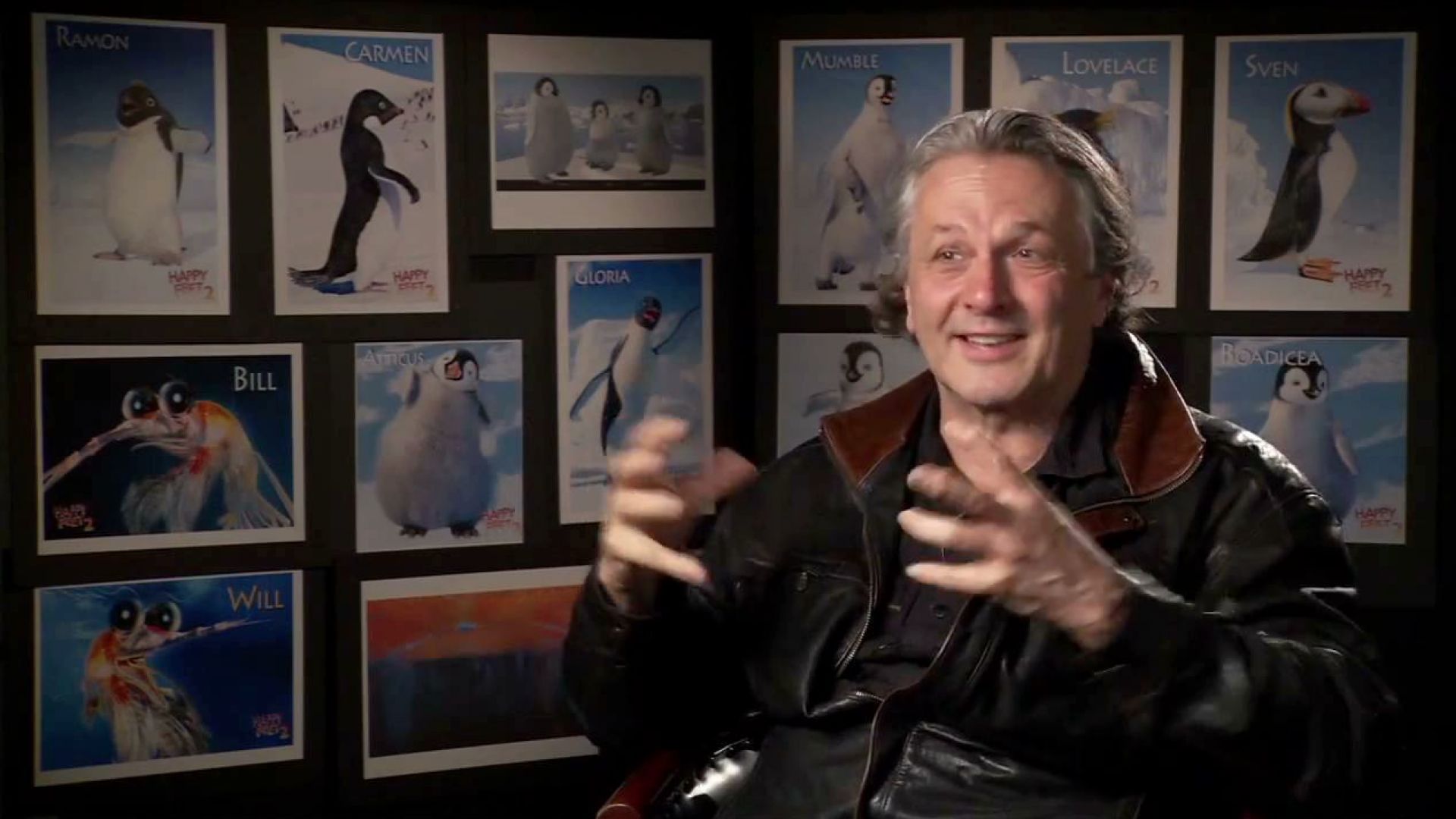
So after all this, we have finally gotten to my take on the movie (as I am sure you have gathered by now, I rarely subscribe to the "TL;DR" nature of the Internet). And to be perfectly honest, I thought the movie was absolutely 100%... okay. Not great. Not even good. Perfectly fine. Serviceable. Which would not matter if it was just another movie. But this is the Justice League movie; a movie that not even Academy Award winner George Miller (you know, Mad Max, Babe and Happy Feet) was allowed to make. It has all the DC mainstays (without Martian Manhunter and Green Lantern but the Corps is still represented in the movie briefly). This should be even bigger than The Avengers. And it is just not.


The cast is a mixed bag for me. I have never gotten the hate over Ben Affleck's performance as Batman. He is better here than he was in Batman v. Superman but in that movie he was pretty much just a bundle of rage in a Batman costume. Here he actually plays the Dark Knight in a way that just feels right. Gal Gadot returns for her role as Diana and she brings back that sense of genuine care and good-naturedness that makes her character likable. The newcomers are a bit of different story. I did not care for Ezra Miller in Fantastic Beasts and Where to Find Them. He is better here than he was in that film, but I could not muster goodwill for his take on The Flash. Jason Momoa plays Aquaman as the drunken badass of the group but that pretty much sums up his character. We get the feeling that he is resentful of his place in the world as someone who is half human. But that is not fleshed out in any way. Ray Fisher gets the short end of the stick as Cyborg - why he is in the Justice League as opposed to the Teen Titans is beyond me. He broods mostly and does not lighten up for anything. Even his trademark "Boo-ya" seems off.


Danny Elfman is the composer of this movie and he certainly is no stranger to superhero movies. He's composed scores for Spider-Man, Hulk and even Avengers: Age of Ultron for Joss Whedon. Most notably however is his theme for the 1989 Batman. When asked if he was going to come up with a theme befitting Ben Affleck's Batman, Elfman refused saying his theme personified Batman perfectly. However, Elfman also chose to bring back John Williams' classic Superman theme that was conducted for the 1978 Richard Donner film. Herein lies the problem: it is not that noticeable within the film itself unless you were actively hearing for it like I was. It can be heard, but themes that are that memorable call for memorable moments not just background nostalgia.


In most good superhero movies, there is almost always an inspiring speech that either the hero gives themselves or a loved one gives the hero. Something that sums up why they are the good guy, why it is important and why they should keep going. I can think of a few examples off the top of my head - Aunt May's "I believe there's a hero in all of us" from Spider-Man 2, Peter Quill's "Life takes more than it gives" from Guardians of the Galaxy and Nick Fury's "A group of remarkable people" from Marvel's The Avengers. Now where is this speech in Justice League? Just before their first battle against Steppenwolf where he is holding humans hostage, the Flash takes Batman aside and fearfully admits he has never actually done battle. Batman breaks it down for him,

"Save one. Save one person. Don't talk, don't fight. Get in, get one out."

I like how Batman breaks down the minutiae of supehero-ing to its core component: helping other people at risk to yourself. This could have been, should have been, a seminal moment for the movie. While it certainly seems to bolster Flash's courage in the following scene and in the rest of the movie, a more memorable signature moment would have been more appreciated.


If there is any improvement on any single returning character from the DCEU, it would have to be Superman, who is brought back from the dead by the Justice League in the second act. This is Henry Cavill's third run at this iconic character. And in this case, the third time might be the charm. At first, Superman is angry and confused; seemingly without his memory. Batman brings Lois Lane (Amy Adams) to him so she can help bring him back to himself. But naturally, the good old Superman we know comes in at the last minute to help save the day. He is smiling, cracking jokes and bringing his formidable powers to bear to help his fellow team members and civilians. This is as close to the Christopher Reeve Superman as we have gotten in quite a good long while; I do not count Superman III, IV and Returns (who would have guessed Kevin Spacey would have turned out to be a bigger villain than Lex Luthor). As long as Cavill is allowed to stay in this mode of Superman and not be the Big Brooding Boy Scout, I'll be glad to see Man of Steel 2. If it ever gets made.


DC's Justice League is not so much a misfire as it is a missed opportunity; an injustice if you will (be sure to tip your waitresses). The cast mostly plays well together, but the playground they are given could use some upkeep and maintenance. Trying to fix the mistake that is Batman v. Superman resulted in efforts too little, too late. I am not saying that the DCEU is beyond saving - Wonder Woman proved this - but it needs to be done quickly and smartly. I really like these characters and the comic book universe they reside in. It just needs more people who are willing to give the time and care they deserve to bring them to the silver screen.

P.S. Stay for the full end credits.


Sunday, May 17, 2015

MAD MAX: FURY ROAD - Full Throttle

NOTE: Mild spoilers.


"If I'm gonna die, I'm gonna die historic on the fury road!"

- Nux (Nicholas Hoult), Mad Max: Fury Road

Very few filmmakers around today have as eclectic a career as George Miller. Originally an emergency room doctor by trade, Miller was daily confronted with the realities of the harshness of the Australian Outback; specifically car and motorcycle accidents. At the same time, he was taking courses at a local film school where he met producing partner Byron Kennedy. Together, the two men devised a film to tackle the dangerous issues of life down under via a futuristic outlook. In 1979, they began the Mad Max series of films. A then unknown Mel Gibson took the title role of a police officer gone rogue in a terrible Wasteland after the tragic deaths of his loving wife and young child. In the sequels to the original, Max is a loner and dragged into fighting for causes other than his own survival. Initially unsuccessful internationally, Gibson's stardom and Miller's storytelling made for a memorable '80s franchise that helped to influence The Terminator and other post-apocalyptic features.


In between the second and third Mad Max films, George Miller was offered the opportunity by Steven Spielberg to direct the final segment in the infamous 1983 film Twilight Zone: The Movie. Miller took the opportunity to remake the classic episode "Nightmare at 20,000 Feet" with John Lithgow taking over for William Shatner in what many consider the best segment of the film (one that certainly didn't end in the deaths of three actors, but that's neither here nor there). After finishing Mad Max Beyond Thunderdome (which many consider the weakest of the films, due to Miller being overcome by the death of his friend Kennedy), Miller directed the fantasy/horror/comedy The Witches of Eastwick, the medicinal drama Lorenzo's Oil, co-wrote the screenplay for Babe (yes, *that* Babe) and even directed Babe: Pig in the City (of which Universal chairman Ron Meyer said years later was among the worst films Universal ever released). From there, Miller took on another franchise that is far and away worlds apart from the Mad Max films: the Happy Feet movies. Miller was attracted to telling a story that dealt with a desert of another kind: instead of blistering hot, freezing cold. Like Babe, Miller did the Happy Feet movies mostly for his children. Happy Feet Two, in particular, is notable for being the final time that actor Robin Williams would be heard in an animated film. 


Still, Miller couldn't shake the feeling that he wasn't done with the Mad Max series. In 2003, he and Mel Gibson had attempted to put together a new Mad Max film and were weeks away from shooting a fourth film when the U.S. invaded Iraq and the dollar shifted in Australia. Gibson decided to walk away from the character in favor of directing The Passion of the Christ. After having similar trouble attempting to start production on a Justice League film, Miller then considered making Mad Max 4 as a R-rated 3D animated film in anime style, but by 2009 (the franchise's 30th anniversary), he finally decided enough was enough and that it was time to reintroduce a live-action Mad Max to the world.


In the desolate world of the Wasteland, Max Rockatansky (Tom Hardy) is more savage than man. In more ways than one, the Road Warrior is not what he used to be. Max is quickly captured by the War Boys, loyal fanatics of a warrior king known as Immortan Joe (Hugh Keays-Byrne; returning to the series as yet another villain, after portraying the first film's Toecutter). The tyrannical Joe sends off a War Rig driven by Imperator Furiosa (Charlize Theron) for supplies, but Furiosa quickly betrays Joe and takes a cargo full of unwed mothers away from his clutches. Immortan Joe sends out a war party led by the ambitious and eager-to-please Nux (Nicholas Hoult of X-Men fame) with a muzzled Max in tow. Max eventually escapes Nux and catches up to Furiosa and the mothers. At first, Furiosa and Max are at odds, but once Max is convinced of their "righteous cause", he pledges to help them, once again becoming a man on a mission.


I don't know if it'd be entirely accurate to say I'm new to the world of Mad Max (I bought the original on Blu-Ray and recommend it; and I also DVR'd The Road Warrior to rewatch it) but for those others of my generation who haven't seen nor heard of these other flicks, it has to be more than wildly confusing. Sure, some might say that this film doesn't necessarily have to be connected to the originals and can stand on its own - which it does for the most part - but unlike The Road Warrior which sums up the lead-up to the Wasteland and the events of Mad Max in less than two minutes. This movie tries to do the same thing with audio news sources, which is interesting. Max crops up to start narrating the movie, but this is eventually abandoned. From what I've read, there was more of his narration throughout the movie but it was eventually cut out after test screenings.


A lot recently has been made up of this Mad Max movie supposedly not being tailored towards men as the franchise had been in the past. The Mad Max movies have introduced strong-willed women in each film (Jessie Rockatansky from Mad Max, the Warrior Woman from Road Warrior and notably Tina Turner's Aunty Entity from Beyond Thunderdome) in the past and this one is no different. The story point of Furiosa and the Mothers is to give Max a "righteous cause" so he can eventually revert from mindless savage to the badass hero we all expect. Charlize Theron gives her all in this part (though I'm kind of confused as to why her and some of the other Mothers don't have Australian accents). It's not entirely her movie as they would like you to believe. And even if it was, by the end of this movie where she loses her robotic arm and one eye, she earned it.


The technical achievements of this film are phenomenal. The amount of physical effects in the car crashes and explosions - a staple of the franchise - is staggering. Take in this fact: George Miller is 70 years old. The cinematographer of this movie, John Seale, is 72. All of this crash, boom, bang would result in blockbuster king Michael Bay watching this movie and sitting there, dumbstruck. And possibly crying into his popcorn. All these vehicles had to be built from the ground up and this movie has one of the longest credits dedicated to stunt people I've ever seen. I'd also like to mention that the score by Junkie XL is very, very good. It amps up the action with hard-hitting drum beats but also compliments the softer scenes with sweeter melodies (almost like the original Mad Max).


Many were surprised to see how well Mad Max: Fury Road did with the critical reception resulting in only two rotten reviews from Rotten Tomatoes. It's the triumphant return of a great director as well as a classic franchise. I'd like to mention I first saw this film in 3D (I hadn't seen a 3D film since Gravity and went through all of 2014 in 2D) and thought it wasn't a bad post-conversion. Hooks, chains, and even guitars fly out towards the screen while expanding the world into the screen. Kick it into drive and see Fury Road.

Sunday, January 29, 2012

TWILIGHT ZONE: THE MOVIE – Tales of Terror

RETRO REVIEW


In 1956, Rod Serling created the famous television series entitled “The Twilight Zone”. The series combined the genres of fantasy, science-fiction and horror with an occasional sense of macabre tongue-in-cheek humor. The show’s immense success was attributed to the chilling stories written by acclaimed writers like Richard Matheson, memorable guest stars William Shatner, Burgess Meredith, and Cliff Robertson and of course, the “often imitated but never duplicated” monotone of host Rod Serling. The series went on to inspire young people to tell their own stories. Four of those people were Steven Spielberg, John Landis, Joe Dante and George Miller. In 1983, they came together to direct four pieces of a tribute of sorts to “The Twilight Zone”. What followed were laughs, screams and a horrible tragedy that irrevocably changed one man’s life forever. This was the feature-length film entitled Twilight Zone: The Movie.


The film starts with Creedence Clearwater Revival kicking in with “The Midnight Special” as two guys (Dan Aykroyd and Albert Brooks) are driving along a mountain road jamming along to the song. As their tape gets eaten in the radio, they despair until the driver (Brooks) plays with his passenger (Aykroyd) by turning out the car’s headlights driving in darkness. After a few minutes, the driver and the passenger start playing a trivia game where they guess TV theme songs. At this point, audiences in 1983 were asking themselves if they had walked into the wrong movie. They each give a few guesses (including “Sea Hunt”, “Car 54, Where Are You?”, “National Geographic” and “Hawaii 5-0”) before their conversation turns to the infamous TV show “The Twilight Zone”. The two men talk about their favorite episodes when the passenger playfully asks the driver, “You wanna see something really scary?” Obliging, the driver pulls over while the passenger gets in the back seat. After a few seconds, the passenger turns around having transformed himself into a monster and attacks the driver. Cue: “The Twilight Zone” music. It’s an absolutely gorgeous way to start a “Twilight Zone” movie by having fun with the audience, reminding them of the source material and of course, scaring them out of the wits. It’s sad that this is the only time that Aykroyd and Brooks are onscreen together; they both have a great comedic rhythm. It’s also the only “good and un-tragic” thing that John Landis contributed to this film. What came next is hard to ignore.


After the main title, the film’s narrator (original “Twilight Zone” star Burgess Meredith) tells the John Landis written-and-directed story of malevolent chauvinist William Connor (Vic Morrow) who after a racist slur-ridden tirade is suddenly thrown back in time to 1939 Nazi Germany where he is attacked by Nazis believing he is Jewish; then, he is dumped into the Deep South in the midst of the Ku Klux Klan who are preparing to lynch him as a black man; he soon finds himself in the middle of a Vietnam warzone being shot at by US troops (with a nice nod to Landis’ Animal House thrown in). Connor is pulled back into 1939 Germany where he is detained and forced onto a train with Holocaust victims which pulls away, never to be seen again. This section of the film gets most of the attention when people talk about Twilight Zone: The Movie. During the production of the film, Landis blatantly broke the law to get two child actors to perform with actor Vic Morrow on set with a dangerous stunt involving a helicopter that ended up killing all three of them. The ensuing trial effectively crippled Landis’ career (though it is not completely responsible for where he is today) and ended his friendship with Steven Spielberg, who was nearly implicated himself. Taking that aspect of the film out of it, I feel that this segment was too punishing for audiences, almost “A Christmas Carol” without the most important element: redemption (which is what Landis had planned with his ill-conceived helicopter stunt). The next segment of the film would have to be infinitely lighter in tone to keep from the audience being emotionally disconnected.


The film’s second segment (a remake of “Kick the Can”) directed by Steven Spielberg features a mysterious man named Mr. Bloom (Scatman Crothers) who comes to a retirement home to bring new life to the place in more ways than one. He convinces the others to join him at night for a game of kick the can. During the game, the senior citizens suddenly revert back to childhood – literally. While they are initially overjoyed and have a lot of fun, they soon begin to worry about what will happen to them. They find that being kids again isn’t all they wanted it to be so they ask to be returned to their normal ages. Mr. Bloom leaves them by telling them to stay their own age but keep “fresh young minds”. After some very big features, I don’t think Spielberg was able to pull off a 15-minute segment in this film. Ron Howard eventually tried a similar concept with better results – Cocoon. Unlike most people, I like Scatman Crothers – his playful enthusiasm is infectious. As a kid, I grew up with him as “Hong Kong Phooey”. It wasn’t until years later that I found out he was in classic films like The Shining. Still, I really do like the score by Jerry Goldsmith in this segment, although it – like the rest of the segment – doesn’t really fit the tone of the rest of the film. However, the next filmmaker up at the Twilight Zone bat would pull off the weirdest and creepiest segment of the film.


Joe Dante, hot off the hit The Howling, remakes one of the classic “Twilight Zone” episodes, “It’s A Good Life” about a young woman in transit, Helen Foley (Kathleen Quinlan) who comes across a young boy named Anthony (Jeremy Licht) who is not what he seems. He has a “loving” family (including the bad guy from Innerspace as his Uncle Walt and Nancy Cartwright as his sister Ethel, who would later become none other than Bart Simpson). As the night progresses, Anthony’s magical demands become more and more frightening to the point where he wishes Ethel into the television set where she is eaten by an evil cartoon dragon. Eventually, Anthony tires of his “family” (which is really made up of people he’s tricked into coming to his house) and wishes them all away, leaving just him and Helen. Helen suggests that he try to develop his power to help people instead of horrifying them and that she will stay with him to assist him. This is Dante unrestrained and a perfect example of his love of “Looney Tunes” (which is constantly on in the TVs in the house). He also showcases a lot more of the eerie elements of the film with transforming a simple bunny rabbit into a hideous monster and pulling a cartoon demon out of the TV. Unlike the actual episode, this segment has a more “happier” ending with Helen and Anthony driving off into the sunrise with flowers blooming around them. I believe this was the first time that composer Jerry Goldsmith worked with director Joe Dante, beginning a collaboration that wouldn’t end until Goldsmith’s death in 2003. Not to mention, of course, an appearance by long-time Dante actor Dick Miller (who is apparently in everything Dante directs). The last segment would be helmed by a relative newcomer, but it would be the highlight of the film thanks to an established actor.


The final segment is directed by George Miller of Mad Max fame (later to be known for directing the Happy Feet films) and is a remake of “Nightmare at 20,000 Feet” well known for featuring a notable performance by William Shatner. John Lithgow stars as John Valentine, a man who has panic attacks whenever he flies. As the flight attendants attempt to calm him down and return him to his seat, Valentine is fearfully reciting flight statistics. While the flight continues, Valentine looks out his window and sees a gruesome creature ripping open an engine. Screaming his discovery, everyone looks outside to find nothing. The flight attendants attempt to convince him that what he saw wasn’t real and offer him sedatives. Trying to get some sleep, Valentine hears a knocking at his window and opens it to find the gremlin sneering at him through the window. This sends Valentine into a frantic frenzy with people having to physically restrain him. The first officer of the plane assures him there is nothing wrong. The plane lurches and the passengers begin to panic, all preparing to die. Seizing an opportunity, Valentine grabs a gun from an FAA agent onboard and shoots through the glass window pulling him halfway out the window. The gremlin notices this and starts walking toward him. It grabs his face and playfully waggles its finger at him disapprovingly before it leaps away into the night. When the plane lands, a seemingly delirious Valentine is hauled away into a straightjacket. However, one of the ground technicians at the airport finds the damaged engine and that perhaps he might not be crazy. Down the road, Valentine is in the back of an ambulance laughing to himself and it is revealed that the driver of the vehicle is the passenger of the beginning of the movie. He plays “The Midnight Special” and ends the movie by jokingly asking Valentine, “Want to see something really scary?” This is probably my favorite out of all four segments mostly due to Lithgow’s performance because he smartly chose not to replicate Shatner’s infamous performance (though a nice little joke is made of it on Lithgow’s former series “3rd Rock from the Sun”). It even brilliantly ties back into the opening of the film and gives the audience one last laugh as soon as they see Dan Aykroyd again.


Anthology films don’t have the best track record in Hollywood; both New York Stories and Grindhouse underperformed at the box office. Most say it is because audiences don’t want to sit around and watch multiple stories; they would rather concentrate on one coherent narrative. However, I think Twilight Zone: The Movie was an interesting experiment to try and replicate the harrowing stories told in 1956. Sure, the helicopter tragedy that took the lives of Vic Morrow and two young actors overshadowed the film as a whole, but once people could see the whole film they would realize the stories were unique to each director. Landis wanted to teach lessons against bigotry, Spielberg wanted to keep hope in the minds of the elderly, Dante wanted to scare and appease audiences with a kid who had unlimited power and Miller wanted to depict how fear can rule our lives and make us irrational. Together these stories may not seem like they co-exist together but they’re interesting to watch on their own and that’s why I believe Twilight Zone: The Movie should get more recognition on its own terms.