Monday, March 12, 2012

JOHN CARTER: Out of This World

What can you say about a story that just can’t be killed? Is it tenacious? Is it intriguing? How about otherworldly? These are the qualities of Edgar Rice Burroughs’ novel “A Princess of Mars”. Its characters are larger than life (some more than others), its landscape is outlandish and it began a science-fiction/fantasy revolution that spanned a century and helped to inspire Star Wars and Avatar. For years, Hollywood has tried to film this colossal tale, with many famous names, and with no success until today. Teaming with two-time Oscar winner Andrew Stanton, Walt Disney Pictures has finally captured the adventures of John Carter.
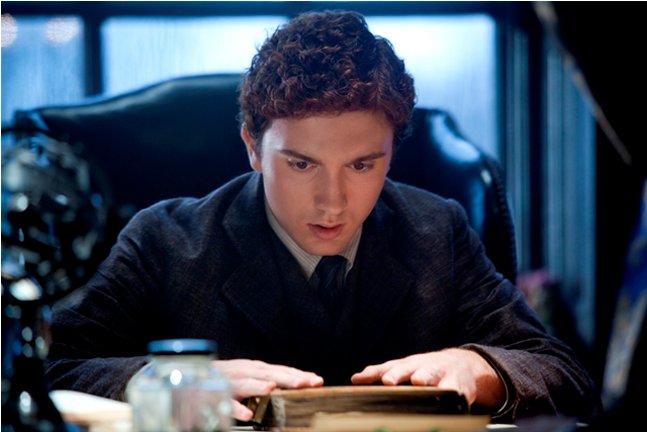
A former US solider, Edgar Rice Burroughs had become a preoccupied writer working for his brother in a stationary company, often taking notes on the very pads the company was making. Burroughs was writing a piece of fiction that he feared others would believe to be made for children. He needed this story to work because he had a wife and two children to support. When he submitted the novel for publishing, Burroughs was paid $400. The book was titled “A Princess of Mars” and he went on to write 10 more novels set in the fictional world of Barsoom. Burroughs would later craft a character that proved to be more popular than “Princess of Mars”, “Tarzan of the Apes”.
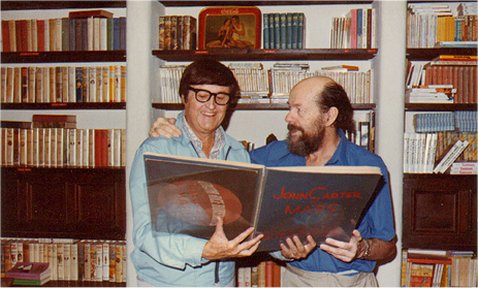
While “Tarzan” was sweeping readers (and soon, decades of movie-goers) off their feet, the world of Barsoom caught the eye of one loony animator. Bob Clampett, the man who helped to invent “Looney Tunes”, came to Burroughs with the notion of turning “A Princess of Mars” into the world’s first feature-length animated film. He wholeheartedly agreed, and work on an animation test began. However, when the test was screened, audiences were “alienated” (pun intended). Clampett stopped development of the project (had it continued, the film might have beaten Snow White and the Seven Dwarfs to theaters) and two decades later, Burroughs passed away.

The book soon landed at Walt Disney Pictures with Terminator producer Mario Kassar in tow. After TRON “failed” to be Disney’s answer to Star Wars, Kassar was convinced this work by Burroughs would compete. Big names soon came attached to the project – Future Pirates of the Caribbean writers Ted Elliot and Terry Rossio, Die Hard director John McTiernan and rising star Tom Cruise. However, McTiernan felt that special effects had not caught up with Burroughs’ vision and the project fell apart. Although the rights returned to Burroughs’ estate, Disney would soon find success in bringing to life the other famous Burroughs creation in 1999’s Tarzan.


Director Jon Favreau, coming off of Zathura: A Space Adventure, was hired by Paramount Pictures to develop the “Barsoom” series of books into a film adaptation after a previous attempt by Robert Rodriguez and (oddly enough) Ain’t It Cool News creator Harry Knowles had fallen apart miserably following Rodriguez’s departure from the Directors Guild of America. Seeking to faithfully adapt the first three “John Carter” novels, Favreau planned to have the alien race of the Tharks – 15-foot-tall green aliens – filmed with practical effects and makeup. After a year of work, Paramount let the rights lapse, and moved onto reinventing the 40-year-old Star Trek series. As consolation, Favreau was put in charge of a superhero film, which turned out to be Iron Man.

It seemed as though John Carter would never be able to get off the ground on Earth as well he could on Barsoom. That is, until the property was put in the hands of Pixar animator/director Andrew Stanton. After finishing Finding Nemo and Wall•E, Stanton was looking for another project and recalled his love of Burroughs’ John Carter novels. Stanton moved from Pixar to Walt Disney Pictures and asked if Disney could purchase the rights for him. As a reward for the success of Wall•E, Disney agreed. Finally, John Carter entered production in January 2010.


Young Edgar Rice Burroughs (Daryl Sabara) is summoned to his beloved uncle’s mansion. Upon arriving, Burroughs learns that John Carter (Taylor Kitsch) has passed away under mysterious circumstances and is buried in a tomb on the property. Carter’s attorney hands Burroughs a journal that Carter kept and is only to be read by him. Years ago, Carter was an ex-Confederate soldier mining for gold in the Arizona hills until he’s captured by a Union colonel (Bryan Cranston) wanting to use his services. As he’s escaping, Carter stumbles upon a cave filled with gold. Carter suddenly finds himself inexplicably transported to Mars. There he soon becomes entangled in another “Civil War” between the red-skinned people of Helium and Zodanga, is captured by the 15-foot-tall green barbarian warriors the Tharks and finds that he has unnatural strength and agility thanks to the planet’s less dense atmosphere. With allies like Tars Tarkas (Willem Dafoe) and the lovely Helium princess Dejah Thoris (Lynn Collins), Carter will go on an adventure unlike any other.


I thoroughly enjoyed this film. This project started in animation and it took an animation director to bring it to life. Stanton may not get all the praise that fellow Pixar alumni Brad Bird got for his live-action debut, Mission: Impossible – Ghost Protocol, but he does his best here even though the heart of his animated films aren’t here. Another thing that doesn’t help is that there are times in the film where it gets slow and expositional. Taylor Kitsch and Lynn Collins both contribute fine performances. Although his character is featured prominently in the trailers and TV spots, Willem Dafoe’s Tars Tarkas, although a very good use of performance capture, is hardly in the film at all; though he does offer the film a lot of humor. One of the highlights of the film is John Carter’s alien pet companion, Woola. He is just so darn cute that you can’t help but smile when you see him.


For years, Disney has been doing their damndest to replicate the atmospheric success of their Pirates of the Caribbean franchise – from good (The Chronicles of Narnia, National Treasure) to mediocre (The Sorcerer’s Apprentice) to “What were they thinking?” (G-Force, Prince of Persia: The Sands of Time). As I’ve said earlier, Taylor Kitsch and Lynn Collins are good actors, even though their performances sadly bring to mind Jake Gyllenhaal and Gemma Arterton from Prince of Persia: The Sands of Time (a film that I believe was clearly made by the wrong studio; the games aren’t meant to be family-friendly). In fact, the film does have a bad habit of coming off as Prince of Persia “IN SPAAAAAACE!” – a good-looking, athletic outcast with a past he is unwilling to talk about teaming up with a feisty but smart princess to save her kingdom. What helped Pirates achieve box office glory was that there were no expectations for it, save for it being based on a well-known theme park ride (not to mention, a good-looking and talented cast); Disney had already released two other films in the summer of 2003 had Pirates failed – Holes (highly underrated film) and The Lizzie McGuire Movie (the less said about that franchise, the better). Transformers exploded in a similar way in 2007.


I know that all of the Hollywood press machine would have you believe that John Carter is nothing but a no-account failure right from the start. A $250 million budget for a first-time live-action director? Preposterous and reckless, they’d say. They also predicted doom when the film had its initial title “John Carter of Mars” retracted to read simply John Carter after the box office fiasco of Mars Needs Moms (of which I will say it is a decent film). The title does indeed appear at the end of the film, because Stanton says that the character has finally earned his title (of course, many others would say Disney demanded he spin his statement). It’s easy to believe the message of doom and gloom, but I ask you to view the film for what it really is: just an old-fashioned fun space adventure. John Carter puts the frontier in final frontier.

Tuesday, February 14, 2012

A Look at Disney's One Saturday Morning


I realize this is less Hollywood big screen and more towards the small screen, but it’s nostalgic nonetheless. Not to mention, this particular block of Saturday morning cartoons launched three feature-length theatrical films. As a kid, this was the one thing that got you up way early in the morning on Saturday – cartoons that were funny, action-packed and even had a message or two to pass on.


Disney’s Doug
This series was after the Nickelodeon run of the Jim Jenkins series had ended and Disney had bought the rights to the characters. In return for starting up “Doug” on a new network (ABC), Jenkins was given the chance to do a whole other TV series on Playhouse Disney called “PB&J Otter”. Many “Doug” fans despise this iteration of the show for aging the characters slightly, forcing Billy West (the original voice of Doug Funnie and Roger Klotz) to leave the series due to payment issues and changing the style of the music (which was a staple of the original series). In my own opinion, I didn’t notice much different; what kids like varies and variety is indeed the spice of life. This show proved to be successful enough to launch its own feature film, Doug’s 1st Movie. Giving a show like “Doug” a movie is a plausible idea but the story they came up with was pretty ridiculous (Doug and his pal Skeeter sets out to find the monster of Lucky Duck Lake) and the box office reflected it with a total of $19 million. If you want the best “Doug”, stick with Nickelodeon.


Pepper Ann
This show was about a young 7th grade girl who is a perpetual daydreamer and lives with her strong willed mother and her sister of questionable gender. Like Doug, the show would often delve into the lead character’s fantasies which were quite odd to say the least. Even weirder was that it had the same composer as “Rocko’s Modern Life”, Pat Irwin. As far as the characters go, Pepper Ann was kinda weak-willed, her friend Nicky was even worse and Milo had no personality. All of the side characters were essentially forgettable. But hey, I’m a guy, so maybe it connected more with girls than it did me. The show lasted for four years, so it did end up proving its longevity.


Recess
Man, was this show a lot of fun! The opening sequence was just plain cool, introducing each of the main characters without saying a word. You had T.J. (the man with the plan), Vince (the star athlete), Spinelli (the tough tomboy), Gretchen (the pig-tailed genius), Mikey (the “gentle giant”) and Gus (the nerdy new kid). In Third Street School, recess is not just a time for fun and hanging out with friends; it has its own governments and cliques. What set apart this show was its series of interesting side characters who would make minor appearances in most episodes and rarely got episodes where the side characters had a main role. The show got its own theatrical film, Recess: School’s Out sending the characters into summer vacation. The story involved a secret government agency taking over Third Street with a plan to use a weapon to move the Moon into position to freeze the entire planet. Sound way too over-the-top for a show like “Recess”? Agreed. They even tried to pull in some ‘60s “peace, love and understanding” for today’s youth, which is completely out of sync with the times. I would say it’s still watchable, but “Recess saves the world” is a bit of overstatement. Even so, “Recess” was the best show I remember from One Saturday Morning.


Mickey Mouse Works/House of Mouse
This was Disney’s way of ensuring Mickey Mouse and his friends stayed culturally relevant by having their in-house television animation division come up with animated short films featuring the characters. Some would focus solely on Pluto getting the paper for Mickey, Minnie Mouse as a conductor in an orchestra and updated segments of Mickey, Donald and Goofy in various odd jobs. Some of my favorites were “Mickey To The Rescue” – Minnie has somehow been captured by Pete and it’s up to Mickey to save her by traversing through traps that Pete has set up. “Mickey Mouse Works” eventually became “House of Mouse” – essentially the same show but with new bookends featuring all of Disney’s animated characters under one nightclub roof. I remember these fondly, but I would rather see more original animated shorts put in front of theatrical films (ex. Goofy’s “How to Install a Home Theater System” in front of National Treasure: Book of Secrets).


The Weekenders
Gosh, was this show BORING! Granted, I was approximately 8 at the time, so the characters in the show didn’t really connect to me. I saw it as a Disney-styled rip-off of Nickelodeon’s “Rocket Power”: both shows involved a group of kids with their own sense of style who stray from the normal crowds. “TV Guide” erroneously claimed that “this show killed ‘Pokémon’”; although the series still has spinoffs currently on air, the main series that everyone remembers simply moved on. I think the idea of teenagers celebrating the weekend is a great idea, but it would probably work better in this case in live-action.


Teacher’s Pet
This show was pretty strange by Disney standards. A dog (with the voice of Nathan Lane) decides he wants more out of life and disguises himself as a schoolboy in class with his owner as a classmate. Original concept, to be sure, but I remember the show was trying to be too smart for its own good. It never really clung itself to me, aside from the basic concept and the dual character of Spot/Scott. Even this show got its own theatrical spinoff, but here’s where things get interesting – this was the film based on a Disney’s One Saturday Morning cartoon that got the best critical reviews, but it also received the worst box office reception. How that happened, I’ll never know.


Buzz Lightyear of Star Command
Pixar making a TV show sounding like a “too good to be true” scenario? Indeed it was as the greatest animation studio on the planet only contributed 30 seconds worth of CG animation to the show for its opening. The show was supposed to be the Toy Story universe’s inspiration for the character of Buzz Lightyear. There was a direct-to-video film with Tim Allen reprising his role of Buzz, but he was replaced by Joe Somebody co-star Patrick Warburton for the series. The show set up Buzz as a member of Star Command with his own team, the mystifying Mira Nova, the bumbling Booster and the hyperactive robot XR. Their adventures were widespread with reoccurring villains (of course, featuring the Evil Emperor Zurg, sworn enemy of the Galactic Alliance) and strange landscapes. Sadly, the show never really captured the fun of the actual Toy Story films and was canceled soon after. Still, if Pixar ever wanted to do a full-on CG-animated show (like DreamWorks Animation’s “The Penguins of Madagascar”), they are more than welcome in my book (and no, I don’t count “Mater’s Tall Tales” but “Toy Story Toons” is a step in the right direction).


Fillmore!
This was a show that nearly captured “Recess”-level of success, in my opinion. Cornelius Fillmore was once a kid on the wrong side of the middle-school law who was inducted into his school’s safety patrol and now fights for good. It’s a parody of shows like “Starsky & Hutch”, two good cops on the beat with over-the-top chase scenes. At times, I think it took itself a little too seriously; more to the point, the kids took their positions on safety patrol too seriously (they talk like they’re 40-years-old). I don’t know, my school never had a safety patrol (granted, it was a private school). Even so, I think “Fillmore!” is a pretty neat show with a great premise. A lot of the episodes are broken up into increments on YouTube, if you have time check ‘em out.


And that’s really all the shows I cared about on Disney’s One Saturday Morning. After 4 years, the block eventually became “ABC Kids” and aired more live-action programming until finally that block was canceled and was replaced with “Litton’s Weekend Adventure” with no cartoons and more of a politically-correct standpoint of “We need to teach your children about how to protect the wildlife and how to eat healthy foods.” To quote Ferris Bueller’s Day Off, “I weep for the future.” For a time, there was good cartoon programming on Disney’s One Saturday Morning – “five hours of summer once a week”.

Sunday, January 29, 2012

TWILIGHT ZONE: THE MOVIE – Tales of Terror

RETRO REVIEW


In 1956, Rod Serling created the famous television series entitled “The Twilight Zone”. The series combined the genres of fantasy, science-fiction and horror with an occasional sense of macabre tongue-in-cheek humor. The show’s immense success was attributed to the chilling stories written by acclaimed writers like Richard Matheson, memorable guest stars William Shatner, Burgess Meredith, and Cliff Robertson and of course, the “often imitated but never duplicated” monotone of host Rod Serling. The series went on to inspire young people to tell their own stories. Four of those people were Steven Spielberg, John Landis, Joe Dante and George Miller. In 1983, they came together to direct four pieces of a tribute of sorts to “The Twilight Zone”. What followed were laughs, screams and a horrible tragedy that irrevocably changed one man’s life forever. This was the feature-length film entitled Twilight Zone: The Movie.


The film starts with Creedence Clearwater Revival kicking in with “The Midnight Special” as two guys (Dan Aykroyd and Albert Brooks) are driving along a mountain road jamming along to the song. As their tape gets eaten in the radio, they despair until the driver (Brooks) plays with his passenger (Aykroyd) by turning out the car’s headlights driving in darkness. After a few minutes, the driver and the passenger start playing a trivia game where they guess TV theme songs. At this point, audiences in 1983 were asking themselves if they had walked into the wrong movie. They each give a few guesses (including “Sea Hunt”, “Car 54, Where Are You?”, “National Geographic” and “Hawaii 5-0”) before their conversation turns to the infamous TV show “The Twilight Zone”. The two men talk about their favorite episodes when the passenger playfully asks the driver, “You wanna see something really scary?” Obliging, the driver pulls over while the passenger gets in the back seat. After a few seconds, the passenger turns around having transformed himself into a monster and attacks the driver. Cue: “The Twilight Zone” music. It’s an absolutely gorgeous way to start a “Twilight Zone” movie by having fun with the audience, reminding them of the source material and of course, scaring them out of the wits. It’s sad that this is the only time that Aykroyd and Brooks are onscreen together; they both have a great comedic rhythm. It’s also the only “good and un-tragic” thing that John Landis contributed to this film. What came next is hard to ignore.


After the main title, the film’s narrator (original “Twilight Zone” star Burgess Meredith) tells the John Landis written-and-directed story of malevolent chauvinist William Connor (Vic Morrow) who after a racist slur-ridden tirade is suddenly thrown back in time to 1939 Nazi Germany where he is attacked by Nazis believing he is Jewish; then, he is dumped into the Deep South in the midst of the Ku Klux Klan who are preparing to lynch him as a black man; he soon finds himself in the middle of a Vietnam warzone being shot at by US troops (with a nice nod to Landis’ Animal House thrown in). Connor is pulled back into 1939 Germany where he is detained and forced onto a train with Holocaust victims which pulls away, never to be seen again. This section of the film gets most of the attention when people talk about Twilight Zone: The Movie. During the production of the film, Landis blatantly broke the law to get two child actors to perform with actor Vic Morrow on set with a dangerous stunt involving a helicopter that ended up killing all three of them. The ensuing trial effectively crippled Landis’ career (though it is not completely responsible for where he is today) and ended his friendship with Steven Spielberg, who was nearly implicated himself. Taking that aspect of the film out of it, I feel that this segment was too punishing for audiences, almost “A Christmas Carol” without the most important element: redemption (which is what Landis had planned with his ill-conceived helicopter stunt). The next segment of the film would have to be infinitely lighter in tone to keep from the audience being emotionally disconnected.


The film’s second segment (a remake of “Kick the Can”) directed by Steven Spielberg features a mysterious man named Mr. Bloom (Scatman Crothers) who comes to a retirement home to bring new life to the place in more ways than one. He convinces the others to join him at night for a game of kick the can. During the game, the senior citizens suddenly revert back to childhood – literally. While they are initially overjoyed and have a lot of fun, they soon begin to worry about what will happen to them. They find that being kids again isn’t all they wanted it to be so they ask to be returned to their normal ages. Mr. Bloom leaves them by telling them to stay their own age but keep “fresh young minds”. After some very big features, I don’t think Spielberg was able to pull off a 15-minute segment in this film. Ron Howard eventually tried a similar concept with better results – Cocoon. Unlike most people, I like Scatman Crothers – his playful enthusiasm is infectious. As a kid, I grew up with him as “Hong Kong Phooey”. It wasn’t until years later that I found out he was in classic films like The Shining. Still, I really do like the score by Jerry Goldsmith in this segment, although it – like the rest of the segment – doesn’t really fit the tone of the rest of the film. However, the next filmmaker up at the Twilight Zone bat would pull off the weirdest and creepiest segment of the film.


Joe Dante, hot off the hit The Howling, remakes one of the classic “Twilight Zone” episodes, “It’s A Good Life” about a young woman in transit, Helen Foley (Kathleen Quinlan) who comes across a young boy named Anthony (Jeremy Licht) who is not what he seems. He has a “loving” family (including the bad guy from Innerspace as his Uncle Walt and Nancy Cartwright as his sister Ethel, who would later become none other than Bart Simpson). As the night progresses, Anthony’s magical demands become more and more frightening to the point where he wishes Ethel into the television set where she is eaten by an evil cartoon dragon. Eventually, Anthony tires of his “family” (which is really made up of people he’s tricked into coming to his house) and wishes them all away, leaving just him and Helen. Helen suggests that he try to develop his power to help people instead of horrifying them and that she will stay with him to assist him. This is Dante unrestrained and a perfect example of his love of “Looney Tunes” (which is constantly on in the TVs in the house). He also showcases a lot more of the eerie elements of the film with transforming a simple bunny rabbit into a hideous monster and pulling a cartoon demon out of the TV. Unlike the actual episode, this segment has a more “happier” ending with Helen and Anthony driving off into the sunrise with flowers blooming around them. I believe this was the first time that composer Jerry Goldsmith worked with director Joe Dante, beginning a collaboration that wouldn’t end until Goldsmith’s death in 2003. Not to mention, of course, an appearance by long-time Dante actor Dick Miller (who is apparently in everything Dante directs). The last segment would be helmed by a relative newcomer, but it would be the highlight of the film thanks to an established actor.


The final segment is directed by George Miller of Mad Max fame (later to be known for directing the Happy Feet films) and is a remake of “Nightmare at 20,000 Feet” well known for featuring a notable performance by William Shatner. John Lithgow stars as John Valentine, a man who has panic attacks whenever he flies. As the flight attendants attempt to calm him down and return him to his seat, Valentine is fearfully reciting flight statistics. While the flight continues, Valentine looks out his window and sees a gruesome creature ripping open an engine. Screaming his discovery, everyone looks outside to find nothing. The flight attendants attempt to convince him that what he saw wasn’t real and offer him sedatives. Trying to get some sleep, Valentine hears a knocking at his window and opens it to find the gremlin sneering at him through the window. This sends Valentine into a frantic frenzy with people having to physically restrain him. The first officer of the plane assures him there is nothing wrong. The plane lurches and the passengers begin to panic, all preparing to die. Seizing an opportunity, Valentine grabs a gun from an FAA agent onboard and shoots through the glass window pulling him halfway out the window. The gremlin notices this and starts walking toward him. It grabs his face and playfully waggles its finger at him disapprovingly before it leaps away into the night. When the plane lands, a seemingly delirious Valentine is hauled away into a straightjacket. However, one of the ground technicians at the airport finds the damaged engine and that perhaps he might not be crazy. Down the road, Valentine is in the back of an ambulance laughing to himself and it is revealed that the driver of the vehicle is the passenger of the beginning of the movie. He plays “The Midnight Special” and ends the movie by jokingly asking Valentine, “Want to see something really scary?” This is probably my favorite out of all four segments mostly due to Lithgow’s performance because he smartly chose not to replicate Shatner’s infamous performance (though a nice little joke is made of it on Lithgow’s former series “3rd Rock from the Sun”). It even brilliantly ties back into the opening of the film and gives the audience one last laugh as soon as they see Dan Aykroyd again.


Anthology films don’t have the best track record in Hollywood; both New York Stories and Grindhouse underperformed at the box office. Most say it is because audiences don’t want to sit around and watch multiple stories; they would rather concentrate on one coherent narrative. However, I think Twilight Zone: The Movie was an interesting experiment to try and replicate the harrowing stories told in 1956. Sure, the helicopter tragedy that took the lives of Vic Morrow and two young actors overshadowed the film as a whole, but once people could see the whole film they would realize the stories were unique to each director. Landis wanted to teach lessons against bigotry, Spielberg wanted to keep hope in the minds of the elderly, Dante wanted to scare and appease audiences with a kid who had unlimited power and Miller wanted to depict how fear can rule our lives and make us irrational. Together these stories may not seem like they co-exist together but they’re interesting to watch on their own and that’s why I believe Twilight Zone: The Movie should get more recognition on its own terms.

Tuesday, January 17, 2012

MEMOIRS OF AN INVISIBLE MAN: Chevy's Unseen Chase

RETRO REVIEW


John Carpenter is highly identified with horror from films like Halloween, The Fog and The Thing. However, he has been known to direct films in other genres – romance (Starman), adventure (Escape from New York) and action comedy (Big Trouble in Little China). He even made a biographical miniseries on the life of Elvis. However, in 1992, he teamed up with “Saturday Night Live” and National Lampoon’s Vacation star Chevy Chase to break from his most well-known genre to create the sci-fi comedy thriller, Memoirs of an Invisible Man. The film would blend creative special effects with suspenseful pursuits but failed to be seen by audiences.


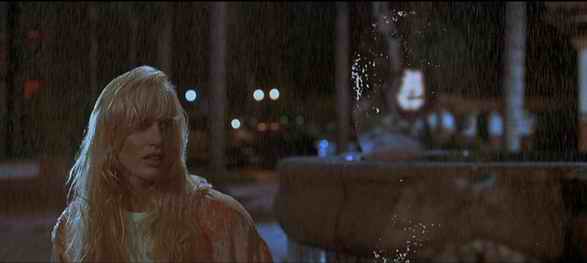
Stock analyst Nick Halloway (Chevy Chase) is a guy who likes to keep to himself and will do anything to avoid people. He prefers to remain alone during social events and does not have many friends. However, one of his only friends, George Talbot (Michael McKean), introduces him to a woman named Alice Monroe (Daryl Hannah) at dinner. They both instantly fall for each other and make out in the ladies’ room, but Alice has to leave. She and Nick make a date, but Nick is so crestfallen that he has already lost someone he truly connected with that he begins to drink heavily.


Nick forgets that he has to go to a shareholders’ meeting early in the morning at a local laboratory, Magnascopics and shows up immensely hungover. Leaving in the middle of the presentation to find a bathroom, Nick stops by a computer control room where he asks a scientist for directions. After pointing him in the right direction, the scientist knocks his cup of coffee onto a console, setting off a hardware meltdown. Everyone evacuates the building except for the otherwise oblivious Nick who has wandered into an executive’s sauna room and takes a nap. When he wakes up, Nick finds himself and much of the building invisible due to the accident. Screaming for help, Nick is taken into the custody of ruthless CIA agent David Jenkins (Sam Neill) who plans to use him for ulterior motives. Not wanting to be trapped as a freak experiment, Nick escapes and goes on the run.


Constantly chased by Jenkins and his goons, Nick tries to navigate through the world as an invisible man but finds it a lot harder than previously expected. He locates the head scientist of Magnascopics, Dr. Bernard Wachs (Jim Norton), but Wachs has no idea what happened or how it happened. He goes to Alice for help, who agrees to get him out of the country so Jenkins can stop chasing him but Jenkins eventually catches up to him. Nick has to use his newfound ability to protect Alice and keep himself out of trouble.


I can see how some would wonder how this film would fit into John Carpenter’s filmography (it features really none of his signatures – none of his stars and no self-composed score) or even Chevy Chase’s filmography as the film is not much of a comedy (or at least not anywhere near as funny as Caddyshack, National Lampoon’s Vacation or Fletch). However, one has to admit that Chase is actually trying to branch out and not just be funny. The effects are surprisingly good by 1992 standards (especially if one sees “The Making of Memoirs of an Invisible Man”), but I can’t ignore that 20 years earlier a Disney film Now You See Him, Now You Don’t was able to pull off nearly the same visuals but on a cheaper budget and to a broader audience. Daryl Hannah, of course, looks stunning in this film (as she did in the late ‘80s-early ‘90s) but her character is barely constructed and is simply there to look good and be the one person to help Nick out. She herself would do a special effects-centered film in the HBO TV movie remake of Attack of the 50 Ft. Woman. However, we all know that Sam Neill (who does play a genuinely good villain in this film) would go on to a film that completely redefined special effects with Steven Spielberg’s Jurassic Park.


Memoirs of an Invisible Man isn’t an awful film, but it certainly could be better. There are really two types of invisibility films: the psychopathic thriller (The Invisible Man and Hollow Man) or there are wish-fulfillment comedies (Now You See Him, Now You Don’t and Ghost Dad). This film tries to play it both ways with lackluster results – either make a straight comedy or a straight thriller. Rarely do the two vastly different genres work together; a notable example would be the Gene Wilder/Richard Pryor film Silver Streak. Still, the effects are quite interesting to watch, the actors are decent and the story is conventional. John Carpenter and Chevy Chase: an once-in-a-lifetime combination that doesn’t achieve the amazing possibilities. Like Nick Halloway, this slightly comedic adventure isn’t easy to see.

NOTE: Yesterday was John Carpenter's birthday! Happy Birthday, John Carpenter! Thanks for reading - Zack