Sunday, February 10, 2019

WARGAMES: The Only Winning Movie

RETRO REVIEW

NOTE: Wouldn’t you prefer a good game of SPOILERS?


“Hey, I don’t believe that any system is totally secure.”
- David Lightman (Matthew Broderick), WarGames

One of the reasons I think the ‘80s was such a seminal decade for moviemaking was that, rather unlike today, original ideas were given precedence. More importantly, these ideas could have a streak of fun to them. These ideas were often termed as “high concept”; a premise that could be summed up in one sentence to get a picture of what the movie could be. Back to the Future is probably the most famous high concept film ever created (“What if you went to high school with your parents?”). Slightly less famous, but arguably just as fun, was a film that was released two years prior: WarGames.


Originally the film was to be directed by Martin Brest as a serious-minded thriller but when the studio preferred the original lighter tone of the script, he begrudgingly left the project a few weeks into filming. Brest would soon move onto the Eddie Murphy blockbuster, Beverly Hills Cop. Needing a director very quickly, the producers hired John Badham, who had experience in replacing previously-hired directors with Saturday Night Fever (in that case, it was Rocky director John G. Avildsen). Badham responded very positively to keeping the film delightful as opposed to dark and WarGames turned into a lighthearted adventure.


The only thing David Lightman (Matthew Broderick) takes seriously in life is video games. He impresses his friend Jennifer (Ally Sheedy) by hacking into their school computer system and improving their grades. He happens upon an advertisement for a computer company’s new line of video games that he wants to track down and play before anyone else. Improvising a system that dials random numbers, David and Jennifer come across an artificial intelligence known as Joshua that seems eager to play games with them. The most interesting game to David is the last one listed: “Global Thermonuclear War”. Little does David know is that Joshua is actually the WOPR (War Operation Plan Response) simulation machine designed for NORAD. When the game actually shows up on the massive screens in the military’s sealed-away bunker, the generals and technicians are convinced World War III is imminent. Now convinced their harmless actions might set off the end of the world, David and Jennifer go on the run to locate the presumed dead creator of the WOPR computer and find a way to stop the countdown to nuclear annihilation.


Matthew Broderick plays David Lightman, a character probably closer to Marty McFly than Ferris Bueller in that while the character is charming and smart, he also is allowed to make mistakes. His fellow John Hughes alumni Ally Sheedy is attractive, bubbly and caring in the way a lot more girl characters in the ‘80s were not being played. John Wood brings a great warmth and intelligence to his character that was originally written for John Lennon before his tragic assassination (Wood would later reunite with Matthew Broderick in the cult fantasy film Ladyhawke). Dabney Coleman and Barry Corbin round out the cast as a bickering team of systems engineer and “good ol’ boy” general, respectively. Robert Zemeckis alumni Eddie Deezen (I Wanna Hold Your Hand) and James Tolkan (Back to the Future) also make brief appearances.


There’s a quote by 2001: A Space Odyssey author Arthur C. Clarke that says, “Any sufficiently advanced technology is indistinguishable from magic”. In the 1980s, computer technology might as well have been magic. Films like TRON and Superman III portrayed computers as almost cartoonishly omnipotent. WarGames stands apart as a more realistic depiction of what computers were and are capable of. Granted, I do not think anybody could outsmart a computer programmed for nuclear holocaust by forcing it to play infinite games of tic-tac-toe but it is entertaining to watch nonetheless.


WarGames is a ‘80s film often forgotten to time when compared to its bigger-budgeted competitors but it deserves better. It garnered three Academy Award nominations including Best Cinematography and Best Original Screenplay (remarkable considering few genre films today would ever be considered). More importantly, it is a positive depiction of two different generations working together for the greater good. Peace is the primary goal we all should strive for and if a quirky little movie can help out in that respect, why not? Especially in this horrible day and age.

Tuesday, January 1, 2019

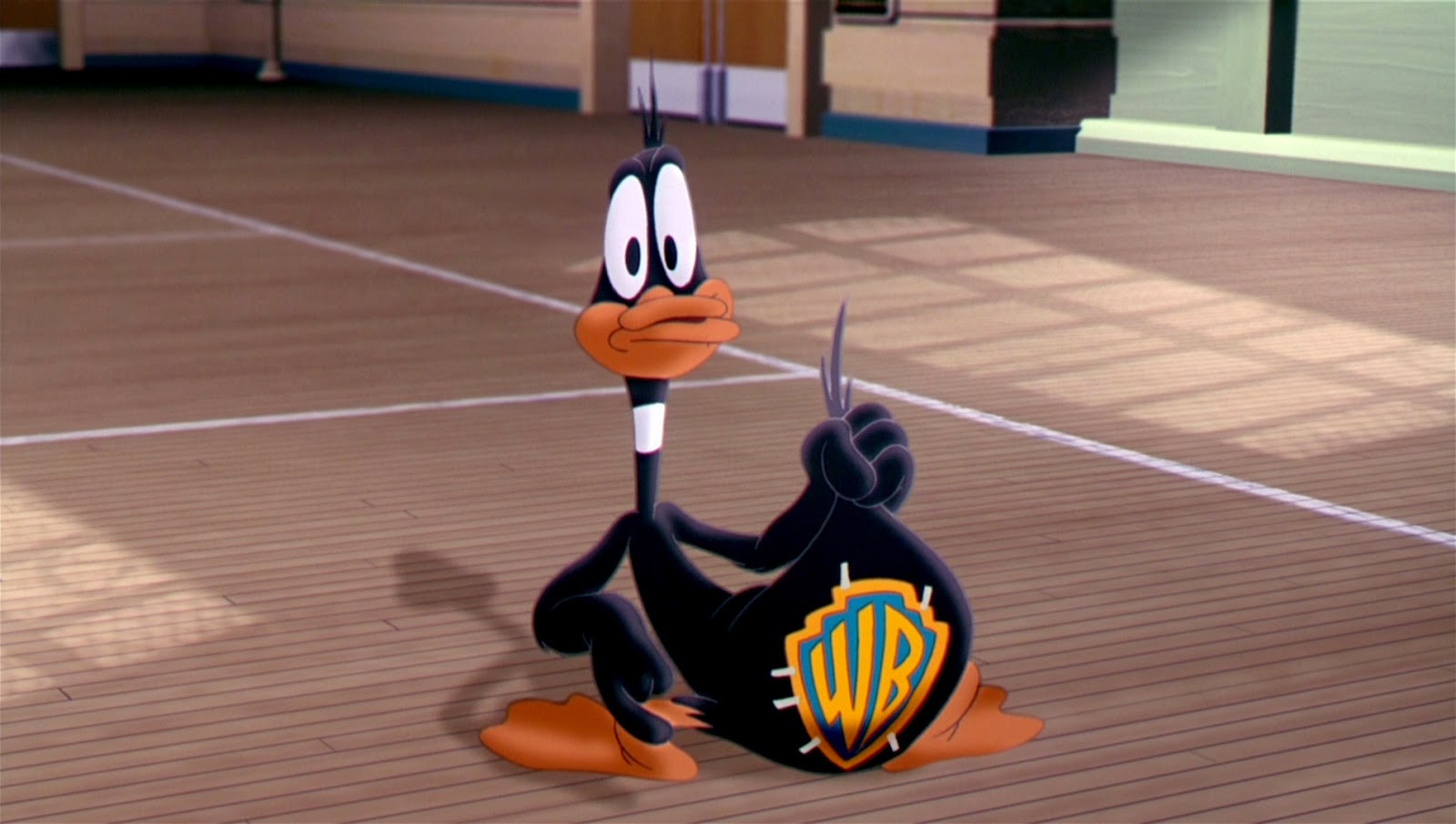
SPACE JAM: Technical Foul

RETRO REVIEW


“We gotta get new agents. We’re getting screwed.”

- Daffy Duck (voice of Dee Bradley Baker), Space Jam

A long time ago... in the ‘90s... there was one athlete who could do no wrong. That gentleman was Chicago Bulls superstar Michael Jordan. The man took basketball to new heights of glory with his amazing skill and physicality. Naturally, everybody wants a piece of him and he became the most-promoted athlete of all time. He had endorsements for just about everything under the sun: men’s underwear, soft drinks, fast food hamburgers, hot dogs and, most famously, Air Jordan shoes.


One of these endorsements resulted in a popular Super Bowl commercial in which Jordan teams up in a basketball game with “Looney Tunes” star Bugs Bunny against Marvin the Martian. The spot was referred to as “Hare Jordan”. Jordan’s agent, David Falk, went to Warner Bros. Pictures (the corporate owners of the “Looney Tunes”) to convince them of the massively popular groundswell that this particular commercial generated. Desperate to generate their own Who Framed Roger Rabbit, the studio hired Ghostbusters director Ivan Reitman to produce the world’s first feature film inspired by a commercial.


The first thing Reitman did was hire the man behind the Super Bowl commercial, Joe Pytka. Pytka, a veteran of music videos and commercials, had directed only one other film prior: the Richard Dreyfuss gambling comedy Let It Ride. Reitman also contracted the animators it would take to bring this spectacle to life; rather than working at Warner Bros., the team found themselves at Universal where they had to endure the monotonous Jaws-themed tram tour stop right outside their door. As Roger Rabbit was the high watermark this new project was aiming for, Reitman called director Robert Zemeckis to ask his advice. Zemeckis replied, “Don’t do it. It nearly killed me.” Undeterred with the Academy Award-winner’s warning, Reitman hired the same visual effects supervisor of Roger Rabbit, Ed Jones, to do the same job for the film soon to be titled Space Jam.


The live-action portions of the film were shot first, bringing in real-life NBA stars and noted Chicago Bulls fan/Reitman alumni Bill Murray. The Looney Tune Land sequences where filmed with Jordan on a massive green screen stage working with actors in head-to-toe green onesies, playing the various Looney Tunes characters. In his contract, Jordan requested the studio build him his own basketball court near the soundstages, not only so he could practice for the film but also keep in shape for the upcoming NBA season. Of course, this drew a lot of attention at Warner Bros. and quite a few stars wanted to play against Jordan, most notably George Clooney.


This film was a huge gamble for Warner Bros., who were banking on both the likability of the world’s most famous athlete and the recognizability of their famed cartoon characters. An equation that included a relatively unknown director, a powerhouse producer, four (count ‘em, four) writers, Michael Jordan and the Looney Tunes. What could possibly go wrong?


In the underground world of “Looney Tune Land”, the most famous cartoon characters have a close encounter with the “Nerd” kind: the weak-willed and diminutive aliens Nerdlucks, who come to issue an ultimatum - come work for their boss Swackhammer (voice of Danny De Vito) at his outer-space theme park or else. While the Tunes take their threat seriously, they don’t take the aliens themselves seriously; taking off on their stature, Bugs and company challenge them to a basketball game. The Nerdlucks have never heard of basketball, let alone play it, so they go to Earth to secretly steal the talents of the NBA’s top players; inadvertently causing a national crisis. They return to the Tunes as oversized basketball-playing behemoths dubbed the Monstars. Deciding that the odds need to be made even, the Tunes literally rope in the greatest basketball player alive, Michael Jordan (naturally as himself). There’s just one problem: Jordan retired himself from the game and now spends his days as a middling minor-league baseball player. But ultimately, Michael becomes embedded in their cause and the battle to save the Looney Tunes takes to the court.


Because this movie came out in the mid-‘90s (not to be confused with the Jonah Hill film of the same name), more than a few people of my generation love this movie more than life itself. And I must admit as a kid, I too was taken with it to the point where I had a makeshift Tune Squad shirt. But as I grew older and immersed myself in the classic Looney Tunes cartoons of Chuck Jones, Friz Freleng and Robert McKimson, I came to a conclusion: this movie is bad. It is so remarkably cheesy and cynical; made purely to merchandise and capitalize. The unrelenting rabid fanbase cannot see past their own nostalgia and understand that this is not how these characters should be depicted. Even Chuck Jones himself said that his Porky Pig would never admit to public urination.


The weakest part of the whole film for me is the main voice cast. Understandably, the shoes of Mel Blanc are impossible to fill. Ever since his death, there has been a revolving door of actors to play the main Looney Tunes characters. The one actor who comes the closest is Mel’s own son, Noel, who assisted his father in his later years with voiceover sessions and ended up developing a fairly accurate mimicry of his father’s characters. Noel was asked to play the majority of his father’s characters in Space Jam, but ultimately was replaced due to contract negotiations stalling out. Billy West and Dee Bradley Baker were cast in the roles of Bugs and Daffy, respectively. These two guys are among the cream of the crop of modern-day voice actors and have done and continue to do great work. However, they are wildly miscast here. Their voices just do not fit these two particular characters and they are the two main leads of the Looney Tunes, so they get the lion’s share of screen time.


One negative element about the film that I would actually like to defend is the performance of Michael Jordan. When critics pick apart this movie, they often cite Jordan as a terrible actor. That is quite unfair as, obviously, Jordan is not an actor by trade. Not only that but the man is playing himself! Sir Lawrence Olivier could not play Michael Jordan if he tried. Having said that, one of Jordan’s co-stars might have been better suited for the lead: the legendary Bill Murray as himself. Putting one of the world’s funniest actors around the world’s funniest cartoon characters should be a no-brained but the movie only brings Murray to Looney Tune Land at the end. He is easily the best part of the whole film and even has the funniest line, explaining how he got to the game (“Producer’s a friend of mine...”).


Space Jam is less a movie and more of a time capsule of what the ‘90s were. It emodied the crass commercialism that had invaded pop culture. Its story is ludicrous, its characters wildly misrepresented and it relies way too heavily on close-ups. Famed director Joe Dante, a dyed in the wool Looney Tunes fanatic, was given the opportunity to bring the characters back to the silver screen with his 2003 film Looney Tunes: Back in Action. Unfortunately, that film was built on the back of previously developed Space Jam sequels (i.e. Race Jam with NASCAR driver Jeff Gordon and Spy Jam with Jackie Chan). Due to Warners prioritizing the Matrix sequels over Back in Action, the film was a dismal failure at the box office and Dante has not directed a studio film since. In more recent years, Warner Bros. has developing a direct sequel to Space Jam, this time with modern NBA superstar LeBron James. Black Panther director Ryan Coogler will be stepping into the producing role that Ivan Reitman had for the original film. All I can say regarding this sequel sight unseen is Coogler is a smart and talented filmmaker and he certainly cannot possibly make the movie worse than the original.

UPDATE:

Friday, October 26, 2018

HALLOWEEN (2018): The Shape Awakens

NOTE: SPOILERS have come to your little town, Sheriff.


In 1978, horror in pop culture was given a new face in Michael Myers, the masked madman of John Carpenter’s Halloween. The film took the yearly night of trick-or-treating for candy and threw a murderer in the middle of it. Shot under guerrilla measures, the film was an unexpected smash hit that launched the careers of both director/co-writer/composer John Carpenter as well as lead actress Jamie Lee Curtis who played Laurie Strode. Carpenter returned to write Halloween II and Curtis reprised her role as Laurie and while the film was well-received for the most part, it did not make as much money as the original. While many fans acknowledge that the film has its thrills, it comes to mind as a quickly-made sequel, unremarkable except for establishing a familial link between predator and prey: Michael Myers and Laurie Strode are in fact brother and sister.


Unfortunately, the franchise would only get more convoluted from here. The producers of the series decided to turn the Halloween title into an anthology brand with Halloween III: Season of the Witch, which does not have anything to do with Michael Myers. Most audiences were confused by the lack of connection with the previous films and denounced it upon release; though today it has since gotten some level of approval from fans. Heeding the call of the box office, 10 years after his initial appearance, the Shape returned in Halloween 4: The Return of Michael Myers. This launched a new trilogy of films where it is established that Laurie Strode was killed in a car accident and left behind a daughter named Jamie. Through muddled plotlines and exposition, the idea of a cult being behind the murderous mind of Michael Myers and the possibility of such a thing being able to be passed down is brought forward and by the sixth film, The Curse of Michael Myers, was flat-lined.


20 years after the original film, Jamie Lee Curtis returned to the role of Laurie Strode in Halloween H20: 20 Years Later. This film established a new continuity in which following Halloween II, Laurie faked her death in that car accident, had a son named John instead of a daughter named Jamie, and moved to California. That, of course, would not stop Michael Myers and a deadly confrontation eventually ensues with Laurie finally beheading the Shape once and for all. As this film made more money than any of the other previous Halloween films, the producers of the franchise could not leave well enough alone and proceeded on a sequel to this film, Halloween: Resurrection. In this film, the ending of H20 is recapped and it is revealed that Michael had switched places (and clothes) with an innocent paramedic and that is who Laurie Strode killed. As a result, she is put into an insane asylum where she spends her days awaiting the day that the real Michael Myers will come back. Lo and behold, he does and she is able to get the drop on him via a pulley system she came up with on the roof of the asylum. But she has to be sure that this masked Shape is actually Michael. This turns out to be a fatal mistake as Michael is able to wrangle his out of the trap and stabs Laurie. His long-term nemesis finally deceased, Michael returns to his Haddonfield home only to find that Busta Rhymes and Tyra Banks have taken it over for a reality show with teenagers spending a night in the Myers house. Like any reasonable person would in this situation, Michael begins a brutal killing spree. After Resurrection, a remake of the original Halloween and its sequel followed – both directed by Rob Zombie. Critics largely derided these films for being torturous beyond just horror. One positive element that was highlighted was the performance of Malcolm McDowell as Dr. Samuel Loomis, Michael’s psychiatrist, taking over for Donald Pleasance (who appeared in Halloween 1-24-6). A third film, Halloween 3D, was planned for release in 2012, but ultimately production never moved forward.


The rights of the franchise soon fell into the hands of Jason Blum, the head of Blumhouse, who produce such horror films as Insidious, Paranormal Activity and the Academy Award-winning Get Out. Blum, who had previously learned the lesson of not straying away from the source material with the box office flop Jem and the Holograms, decided the film would not be any good without getting the approval of original director John Carpenter. Carpenter, who had previously seen his earlier work like Assault on Precinct 13 and The Fog remade to dismal results, was quite disinterested with Blum's efforts to impress until Blum declared that he would step away from the film if Carpenter did not approve. He also warned that Universal Pictures was going to make the movie with or without him, so it would be nothing but beneficial if he was involved. Taken with Blum's smooth salesmanship, he not only agreed to be creative consultant to the project but also to return as composer (with his son Cody and his godson Daniel Davies). Blum recruited David Gordon Green and Danny McBride, who had previously worked together on comedies like Pineapple Express and Your Highness to bring the new Halloween to life. Coming up with a new concept involving erasing all continuity but the original 1978 film, the two set about to bring back Jamie Lee Curtis as Laurie Strode. Curtis was initially skeptical of returning but after a phone call from Jake Gyllenhaal, Curtis’ unofficial godson and star of Green’s previous film Stronger, she was back onboard.


40 years after the babysitter murders of Haddonfield, Illinois, psychotic murderer Michael Myers is about to be transferred from the county prison to a maximum penitentiary where he will spend the rest of his days. Two podcasters from England arrive the day before his transfer to attempt to interview him regarding his actions. Getting nothing out of him, they decide to track down Laurie Strode, his sole survivor. However, Laurie has become a reclusive survivalist and other than offering vague warnings, she too has nothing to say. In the process of transfer, the prisoner bus crashes and Michael escapes. He first goes after the podcasters who taunted him with his own mask and sets out for Haddonfield. Laurie learns of the crash and tries to convince her estranged family – including daughter Karen (Judy Greer) and granddaughter Allyson (Andi Matichak) – that it is no longer safe with Michael wandering the streets. The only place that is safe is her stronghold that Laurie has tricked out with all sorts of gadgets and weaponry to prepare herself for the increasingly inevitable confrontation 40 years in the waiting.


I am not a horror film fan by far, but I do have respect for the classics ala Psycho and The Shining. I have since come to a respect of the original Halloween by John Carpenter whose work I admire. Through watching Brad “The Cinema Snob” Jones’ reviews of the franchise, I was brought up to speed on the history of the Halloween franchise that I tried my best to summarize as briefly as possible above. What helps this film immensely is the erasing of all the previous continuity – just get rid of everything that does not matter and focus on the simplicity of Laurie Strode’s story. The nightmare she has long feared is now coming true – the Shape is back. Everything in the film that revolves around her is very well done. Everything else that does not have Jamie Lee Curtis is a watered down retread of the first film, right down to shot recreations which border from okay to unnecessary. The teen elements of the film aggravated me the most. It just screams of corporate executives filling the movie with things they hope the “young people” will like.


The ancillary characters – ranging from the podcasters to the annoying adolescents – are merely here for Michael to slaughter. You do not feel anything for them at all. Granted, Laurie’s friends in the original film are not given the most dignified deaths but at least you got to know them. Young Allyson’s friends are largely grating and you are just sitting there waiting for Michael to stab them. There is a minor twist involving Michael’s new psychiatrist wanting him to fight Laurie again so he can study how 40 years between confrontations can change people. It is established and then tossed away within a matter of minutes.


But the element of the film that everyone is the most interested in – the sole reason the movie exists in the first place – is Jamie Lee Curtis returning to the role that began her career. Curtis has made no secret that despite her gratitude to Halloween and other horror films in her early life, she much prefers making anything but horror movies. However, she is actually given a role of substance here where the hunted become the hunter. She takes on a very Sarah Connor Terminator 2 vibe in this film that is very welcome to see. Scenes I enjoyed the most involved Laurie driving around in her pickup truck listening to police scanners, trying to track Michael down. The movie also does not shy away from the negative aspects of her life – the fact that she very clearly projected her fears onto her daughter from a young age and alienated her as an adult.


All in all, Halloween (the third film in this series with the exact same title) is best when it is doing its own new thing as opposed to what we have already seen before. Jamie Lee Curtis delivers one of her strongest performances to date and John Carpenter returns to compose a fitting score to the film, revamping his original themes. However, the film is dragged down by the additions of unnecessary and grating characters with little to no likability or influence on the plot. The triumphant ending leaves little indication that Michael could return but as this franchise has proven time and time again that it only takes a weak box office to stop Michael Myers.

Monday, September 10, 2018

The Next Generation of Never Happened

Back in the day, there was a great movie podcast called "The Hollywood Saloon", hosted by Andy Siems and John Jansen. Before there was an unfortunate falling out between the two, they posted a three-hour swan song of a show entitled "Never Happened". This was a show dedicated to the movie projects that were so close to being made and never got made. Examples include Stanley Kubrick's Napoleon, George Miller's original take on Mad Max: Fury Road (starring Mel Gibson) and Quentin Tarantino's pitch of Casino Royale (starring Pierce Brosnan). If a three hour podcast seems overwhelming, fret not because Andy and John had a way of talking that had a great pace; getting out all the necessary information in an entertaining fashion. Although they are now gone, the idea is still sound and in need of updating! So without further ado, here are five projects that never saw the light of day: The Next Generation of Never Happened!


  • Robert Zemeckis' Yellow Submarine

In 2008, Robert Zemeckis and Walt Disney Pictures signed an agreement to house performance capture production company ImageMovers Digital. The deal, headed by then-studio head Dick Cook, was bringing the Academy Award-winning director and his new favorite filmmaking technology to the Mouse House. In three years, the studio released two films, Disney's A Christmas Carol and Mars Needs Moms, with a third in development. However, Mars Needs Moms bombed so badly that Disney immediately disowned ImageMovers leaving a distraught Zemeckis to return to live-action filmmaking with Flight and The Walk

NOTE: The above image comes from "The Beatles: Rock Band".

The decision left behind the unmade 3D remake of The Beatles' Yellow Submarine. At the time, it was considered that a combination of Disney, the Beatles and Zemeckis would be irresistible. Zemeckis, himself a Beatles fan, began his directing career with a love letter to the Fab Four, I Wanna Hold Your Hand. It was so far in development that it was already being previewed at the first ever D23 fan convention (where the title treatment image was taken) and casting was already underway including Cary Elwes (Disney's A Christmas Carol) as George Harrison and Peter Serafinowicz (Shaun of the Dead). The Tenth Doctor himself, David Tennant, had auditioned for the film's chief villain - the Blue Meanie. Appearances by Paul McCartney and Ringo Starr, the two remaining Beatles, were being planned but like the rest of the project, never transpired.


"That would have been a great one to bring the Beatles back to life. But it’s probably better not to be remade – you’re always behind the 8-ball when [you do] a remake. It gets harder and harder [to make movies]. With the current state of the industry, it’s difficult to stay passionate about it. The hardest thing for a filmmaker as he’s aging is saying, 'How much more of this crap can I take?' It’s tough, I can only do it if I have a script to believe in."
- Robert Zemeckis

Likelihood (to ever be made): Never.
  • Frank Oz's The Cheapest Muppet Movie Ever Made

Before the Jason Segal reboot of The Muppets, Disney had been courting an idea before 2011 that was actually co-developed by Jim Henson before his untimely death. Entitled "The Cheapest Muppet Movie Ever Made", the movie would start with the greatest 3D opening title sequence ever created. It would soon be revealed that the Muppets were sitting in a screening room watching this footage, as directed by Gonzo. Kermit would praise Gonzo for his efforts but Gonzo would sheepishly reply, "There's one problem, I just blew the whole budget on the title sequence." As they're wondering what to do, there's a studio executive banging on the door to the screening room screaming, "WHERE'S OUR MOVIE?!" Sneaking out the backdoor, the Muppets steal a few cameras from the Disney lot. They go off guerilla style and finish the movie with a few unsuspecting celebrities (among them were rumored to be Vince Vaughn, Rachel Ray and... Christian Bale in character as Batman). Sound familiar? Well, that's because it's also the plot to Frank Oz's film Bowfinger.


Oz hadn't worked with the Muppets extensively since The Muppet Christmas Carol; his Muppet roles for Muppet Treasure Island and Muppets in Space were all done with Oz contributing the voice for said characters in post-production. Working Muppeteer Eric Jacobson has since taken over for most of the Oz characters. Once Disney purchased the film rights to the Muppets, studio executive Dick Cook went to Frank Oz about making the film Jim Henson left behind. Though it was familiar territory in more ways than one, Oz was intrigued and spent a few weeks going over the script and building a preliminary budget. He presented the budget plan to Dick Cook and it's $40 million and Cook nearly has a heart attack. "It's The Cheapest Muppet Movie Ever Made," he complained. "I was thinking like $15 million?" Oz looks Cook dead in the eye and says deadpan, "Do you understand how much money it takes to make things look cheap?" So Oz was let go and Jason Segal was allowed in. Frank Oz's last directorial film in theaters was the British comedy, Death at a Funeral (which was later remade in America with Chris Rock, Martin Lawrence and Tracy Morgan in the leads) and he continues to work in TV. The Muppets finally made it in theaters in 2011 to $165 million worldwide which leads to the Segal-less sequel, Muppets Most Wanted, three years later which grosses less than half of that worldwide. 

Likelihood: Probably never
  • Richard Donner's Crazy Taxi

In probably one of the most weird combinations of directors and material, filmmaker Richard Donner (The OmenSuperman: The MovieThe Goonies, Scrooged and the Lethal Weapon movies) was approached about creating a movie based on the hysterical video game "Crazy Taxi". In the game, you take on one of four wacky drivers who will literally do anything - legal or illegal - to get their clients to their destination on time. Players fell in love with its insane gameplay without any consequences from police or other authority figures, the often irascible customers who will jump out of the car if you are late to their destination and the inimitable soundtrack exclusively featuring the bands The Offspring and Bad Religion.


Somehow, a game controller connected to "Crazy Taxi" wound up in the hands of Richard Donner. He played the game and loved it. SEGA was even prepared to redefine their franchise by what Donner and crew would create with the new film, though Donner downplayed any ideas of sequels before the first film had even been released (an oddity 10 years ago, a near impossibility today). Unfortunately, by the time Donner was able to tear himself away from the game and sit down with potential writers, it was determined that there was no real way to create enough of a plot to satisfy both gamers and moviegoers. SEGA had to watch as Donner removed himself from the project, effectively killing it. They were, however, out of the line of fire as the next decade of filmmaking could not save video game movies like Doom, Prince of Persia: The Sands of Time, Max Payne, two different Hitman movies and most recently, Assassin's Creed and Rampage. Next year will be the time SEGA finally jumps to the big-screen with their flagship character Sonic the Hedgehog, who has previously made appearances in Wreck-It Ralph and Ready Player One. Will fortune smile upon the Blue Blur? Time will tell, but Crazy Taxi stalled out in first gear.

"I plan on doing a lot of experimentation with this film, trying things no one's really played around with, to really put the audience in the front or back seat of the taxi during the action sequences. You can do a lot more with the camera work in a movie to make the action sequences feel like those in the game. While a lot of video games are set in science-fiction environments or fantasy worlds, Crazy Taxi is set in New York City with a Russian cab driver. If you do this right, it'll be a lot of fun."

- Richard Donner

Likelihood: Never.
  • Brad Bird's 1906

Two-time Academy Award winner Brad Bird is one of the film community's most beloved storytellers. Starting with the immortal tearjerker The Iron Giant and rounding out with the recently released Incredibles 2, Bird has proven himself to be a capable filmmaker with almost anything you put in front of him (Tomorrowland notwithstanding). However, there is one project that has continually eluded him - an epic drama adventure based on a book called 1906


The film, a retelling of the tragic 1906 San Francisco earthquake, was being developed by Warner Bros. Pictures in the hopes of replicating another Titanic by including a love story in the midst of chaos. Following completion of Ratatouille, Bird signed on to direct and rewrite the screenplay written by the book's author. To alleviate fears of an escalating budget, an unusual contract was put into place for the film to be a co-production between Warner Bros., Walt Disney Pictures and Pixar. The Shelby Forthright sequences of WALL-E are rumored to have been a test for Pixar to try out live-action filmmaking for both Bird and future John Carter director Andrew Stanton. However, the fact that Brad Bird had never directed a live-action film before continued to stick with Warner Bros. and they were reluctant to commit potential hundreds of millions toward a "cartoon" guy.


Hope came in the form of J.J. Abrams, who texted Bird with one word: "Mission?". A two-year journey began for the Incredibles filmmaker to finally make the jump from animation to live-action with the 2011 film Mission: Impossible - Ghost Protocol. The film quickly became not only the highest grossing film in the series but the most critically acclaimed as well. Bird proudly came back to the Warner Bros. lot, expecting the executives to be suitably impressed. Apparently not, as Bird was told, "You directed the fourth installment of a film franchise based on a television series starring the most recognizable movie star in the world. What else ya got?" Bird was incensed, but began looking for another bankable project. Then, Tomorrowland happened. All this time, Brad has been the sole cheerleader for 1906 - even recently, on the press tour for Incredibles 2 he was quoted as saying that the project was not dead and may use the plan that Dark Tower abandoned: an intertwining media project of a TV miniseries culminating in a feature film for the actual earthquake. If cameras began rolling tomorrow, they would do so without the participation of Disney; with Marvel and Lucasfilm, they have bigger fish to fry. It seems that for now, all of Bird's men may not be able to put 1906 back together again.

“At (that) time, Chinatown was coexisting with the Barbary Coast, which was like the Wild Wild West, and at the same time Nob Hill had the upper class. It was a time between two centuries. You had horses and cars existing simultaneously. It’s just a volatile mix of things and then you throw in an earthquake. I mean, come on, if that doesn’t buy popcorn …”

- Brad Bird

Likelihood: May still happen.
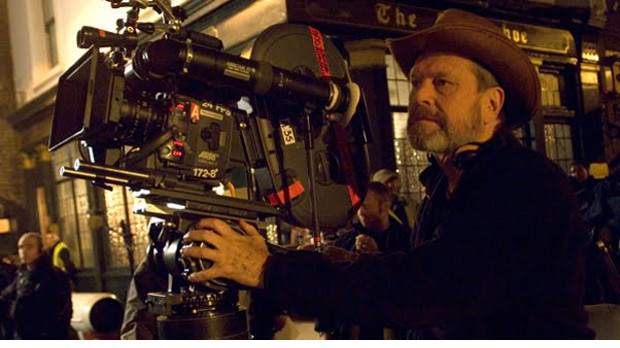
  • Terry Gilliam's Son of Strangelove

I have made no secret that my favorite of the films directed by Stanley Kubrick is his sole comedy, the witty war film Dr. Strangelove or: How I Learned to Stop Worrying and Love the Bomb. It is hysterically funny, showcasing the last people we would ever want in charge if the nuclear bombs were going to fall. The incomparable Peter Sellers delivers not one, not two but three landmark performances and even has two of them carry on conversations with each other. Though one must not ignore the amazing work of George C. Scott as General Buck Turgidson, who literally trips himself up without breaking character in one of my all-time favorite shots of cinema. In his career, Stanley Kubrick never made a sequel to any of his other films; though a sequel to his Strangelove follow-up, 2001: A Space Odyssey (recently re-released in IMAX and it was breathtaking), was made without his cooperation. Such a concept seemed beyond a master like Kubrick. But almost 20 years after his death, the master is still taking us back to school.


A sequel to Strangelove is a tale of two Terrys - Terry Southern, one of the co-writers of Dr. Strangelove and Terry Gilliam, famed Monty Python comedian and director of such films as The Fisher King, 12 Monkeys and Fear and Loathing in Las Vegas. After the death of Southern in 1995, his family donated boxes upon boxes of his literary work to the New York Public Library where it was recently discovered treatments for a film titled Son of Strangelove. Other potential sequel titles included Turgidson's Mother or: Into the Shaft! and Muffley Strikes Back. As Strangelove ends with the end of the world via the Doomsday Machine, the film would have followed through with Strangelove's mad plan to repopulate the world in mine shafts, with "10 females to each male". No word if Dimitri got to make it into the shaft with his poached eggs. Kubrick apparently approved the development of the film and chose Terry Gilliam to direct it, feeling he had the right sensibilities. There was just one problem: Gilliam did not know about the project himself until over a decade after the passing of both Kubrick and Southern. Gilliam said he would have most definitely taken on the project. My only question is who on Earth would have been able to follow in the footsteps of Peter Sellers? Steve Martin tried it with his two Pink Panther films and they went nowhere. I think it's best to leave Dr. Strangelove forever in the War Room, where it can walk into immortality.


And that's just five of the projects that never ever got off the ground. Should they have? Are there more you'd like to hear about? Let me know in the comments!