Friday, May 10, 2013

SCOOBY-DOO AND THE RELUCTANT WEREWOLF: Shaggy Gets Shaggier

RETRO REVIEW


As previously mentioned last week, Hanna-Barbera launched a series of syndicated films called the "Hanna-Barbera Superstars 10". To briefly recap, in the '80s, Hanna-Barbera was struggling to stay topical with the Saturday morning generation, so they made the "Superstars 10" films to bring back their original characters for a new audience. However, bringing characters from the '60s forward twenty years is a fairly difficult prospect. Especially one that has so many incarnations like Scooby-Doo.


"Scooby-Doo, Where are You?" began airing in September 1969. It was instantly popular although formulaic in plot: every episode managed to end with the creature/ghost/monster that Mystery Inc. was chasing to be none other than a disturbed and disgruntled adult intoning the now infamous phrase: "And I would've gotten away with it too if it wasn't for those meddling kids!" Two years later, another series followed called "The New Scooby-Doo Mysteries" that featured real-life celebrities (more often than not, voiced by their actual counterparts). It launched the characters even more into pop culture (oddly enough, the theme song of the show managed to make its way into the background of David Fincher's Zodiac).


But by the '80s, Scooby had been having some trouble maintaining his popularity. The series "The 13 Ghosts of Scooby-Doo" attempted to have a darker tone with the ghosts being real manifestations rather than crooks in sheets. They even managed to procure the legendary Vincent Price to perform the voice of Vincent Van Ghoul, a benevolent sorcerer who tasks Scooby, Shaggy, Daphne, Scooby's nephew Scrappy and a young pickpocket named Flim-Flam to recapture 13 of the world's most terrifying ghosts who were imprisoned in a Chest of Demons after Shaggy and Scooby were tricked into opening it. Still, the show was canceled after - naturally - 13 episodes. But Scooby would become an integral part of the "Superstars 10" series with a trilogy of films: Scooby-Doo and the Boo Brothers, Scooby-Doo and the Ghoul School and the one I've decided to talk about today: Scooby-Doo and the Reluctant Werewolf.


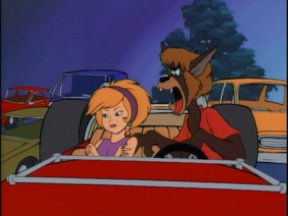
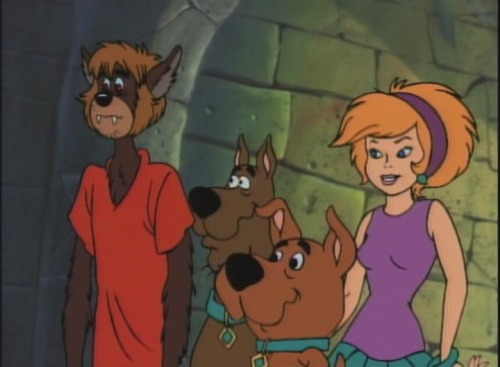
Count Dracula (voice of Hamilton Camp) is readily organizing the annual Monster Road Rally in Transylvania which gathers together the world's most famous monsters in a race for fabulous prizes (at least as defined by the monsters themselves). He's dismayed to find that the Werewolf has retired and skipped town to Florida. Now he has to come up with a new werewolf who has a talent for racing. He stumbles upon Shaggy Norville Rogers (voice of Casey Kasem). Shaggy - who lives with Scooby (voice of Don Messick), Scrappy (Messick) and a girlfriend we haven't heard about until now, Googie (voice of B.J. Ward) - is now a professional race car driver. Little does he realize that he is being stalked by Dracula's gruesome twosome henchmen, The Hunch Bunch. After a few unsuccessful attempts, they finally are able to turn Shaggy into a werewolf. They then kidnap him and the gang and take him to Transylvania. Upon arriving, Shaggy makes Dracula promise to change him back to normal if he wins the race. Dracula "agrees" and gives Shaggy a new car to race with, the Wolf-Wagon. If Shaggy can just survive the Rally, he'll go home but Dracula won't make it easy for him.


I'm happy that Shaggy finally gets a central role in a Scooby-Doo adventure. He's my favorite character and I loved his '80s red shirt. This premise sounds decent, but it quickly descends into a knockoff of "Wacky Races". I have nothing against "Wacky Races", but there's a better series of situations one could get into based on the Reluctant Werewolf title. And Scrappy-Doo is a horrible character. Speaking of characters, who is Googie? Since when does Shaggy have a girlfriend? She doesn't show up anywhere else but this movie.


All in all, Reluctant Werewolf isn't an unwatchable film by any means, but it simply does not take advantage of what could be a great story. Scooby-Doo is a franchise that suffers from overexposure. Let's take a few years off of anything Scooby-Doo related and then bring the character back.

Friday, May 3, 2013

THE JETSONS MEET THE FLINTSTONES: Yabba-Dabba To the Future

RETRO REVIEW


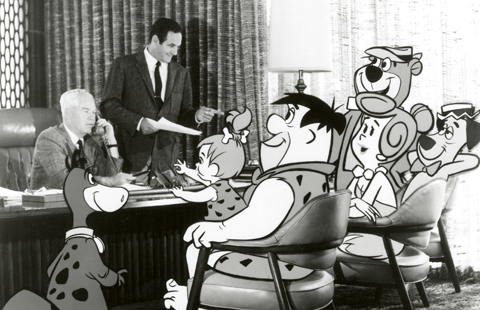
In the late ‘50s, William Hanna and Joseph Barbera – two former MGM animators – struck out on their own and established their own animation studio aptly named after them. Throughout the next decade, they would create numerous classic characters that the world immediately fell in love with: Scooby-Doo, Yogi Bear and Top Cat, to name just a few. However, they made history when, in 1960, they created the world’s first animated television sitcom, “The Flintstones”. By establishing that the problems with modern technology had occurred way back in pre-historic Bedrock, Hanna and Barbera were able to make jokes about televisions, automobiles and other contemporary contrivances. Audiences tuned in to see what mishap best friends Fred Flintstone and Barney Rubble had gotten themselves into this time. In the six years it was on the air, it became a piece of Americana.


Hanna and Barbera decided to repeat their success two years later with one major difference: take the setting out of the Stone Age and into the (then far-off) 21st Century. The result was “The Jetsons”. The humor from that show also partly stemmed from technology, but from a different point-of-view – in the future, humans can still be inept of the very things that are supposed to make our lives easier. Though the show never reached the historic heights of “The Flintstones”, it was still regarded fairly well.


However, in the next two decades, Hanna and Barbera soon learned that trying to repeat your successes far too often leads you into an overproduction of content and a lesser quality. In trying to recapture their success with the core characters they created, the two began a series of specially-made syndicated films called the “Hanna-Barbera Superstars 10”: a Yogi Bear trilogy (Yogi’s Great Escape, Yogi Bear and the Magical Flight of the Spruce Goose, Yogi Bear and the Invasion of the Space Bears), a Scooby-Doo trilogy (Scooby-Doo and the Boo Brothers, Scooby-Doo and the Ghoul School, Scooby-Doo and the Reluctant Werewolf) and then other features like Top Cat and the Beverly Hills Cats, The Good, the Bad and Huckleberry Hound and Rockin’ with Judy Jetson. But the one I’m gonna talk about today brought their two iconic families together for the only time ever: The Jetsons Meet the Flintstones.


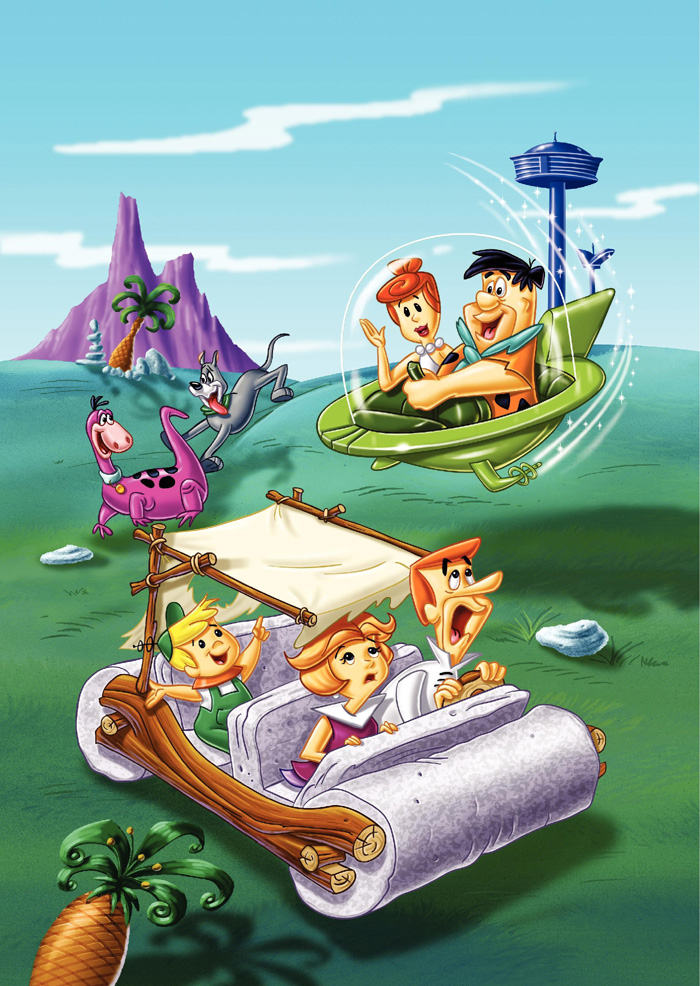
Though they are centuries apart, both George Jetson (voice of George O’Hanlon) and Fred Flintstone (voice of Henry Corden) have been having the same kind of problems. All they want is a simple getaway from their troubles. Meanwhile, Elroy Jetson (voice of Daws Butler) has built a time machine and plans to take the family on a trip to the 25th century. Due to a mishap, they are instead sent back in time to the Stone Age, right where the Flintstones and Rubbles happen to be camping. When Elroy determines that it might take a while to get the time machine repaired, the Flintstones agree to help them blend in to prehistoric society. Elroy finally does get the time machine to work again, but this time it accidentally sends the Flintstones and Rubbles into the future, stranding them in the past. Now that they are both wildly out of their elements, the two groups must learn about their new surroundings and try and get back home.


This is a concept that should have gotten a theatrical release (unlike that horrible The Man Called Flintstone movie). But for what we got, syndication was the best plan. A couple of polishes at the script and it could have been really something. The story takes a while to get going but just as we get to the titular meeting, the story take s a long detour in trying to get Fred and Barney’s job back in a rather underhanded way by Fred in getting George to use his future technology to cheat. I don’t know what’s worse: having Fred being a no-good scoundrel in using George or George allowing Fred to take advantage of his technology. Their efforts matter little as Fred and Barney still lose.


One of my least favorite cartoon characters is Judy Jetson. I have little to no sympathy for this character. In every appearance, she’s either going on and on about some boy she just met or crying her eyes out because of some boy she just broke up with. I’d rather not use a certain word to describe such behavior, but she fits the description. I don’t blame her voice actress, Janet Waldo, for the unlikeable characterization but the writers (and whoever made the horrible business decision to replace her with Tiffany for Jetsons: The Movie).


But, all in all, this is what Hanna-Barbera fans have been wanting for years and finally got. Their two favorite families getting to meet. I’m glad it didn’t turn out to be just a dream of Fred’s (like the earlier episode where the Green Gazoo actually transported the Flintstones and Rubbles to a pre-Jetsons Orbit City) and that clearly H&B cared about their characters. Unfortunately, neither man is alive today, but they left behind a long legacy that won’t be soon forgotten by those who enjoyed  and continue to enjoy what they brought to the world. 

Wednesday, March 20, 2013

OZ: THE GREAT AND POWERFUL: There's No Place Like Disney


It's amazing to think how one director can change Hollywood history in the span of one year. The year? 1939. The director? Victor Fleming. You may not recognize him, but the two films he made that year are among the most popular ever made: Gone with the Wind and The Wizard of Oz (both adaptations of popular books).


While Gone with the Wind was an ambitious undertaking like never before, The Wizard of Oz was actually not the first time the Yellow Brick Road had made it to the silver screen. Silent and black-and-white versions had already been attempted, but Fleming wanted to bring Oz into a whole other cinematic world: color. With its memorable characters (including an unforgettable villain), bright and impressive scenery and its unmistakable theme song, "Over the Rainbow" (which was nearly cut from the film), The Wizard of Oz was nothing short of magical.


A sequel was briefly considered by the filmmakers, but by then, Judy Garland was a superstar and they were unable to make a deal. Still, Oz continued to thrive in other films like The Wiz, a 1978 adaptation with an all African-American cast including the great Diana Ross and the King of Pop himself, Michael Jackson in his acting debut. Then in 1985, Walt Disney Pictures made an unofficial sequel to the 1939 film, Return to Oz, directed by Walter Murch (screenwriter of George Lucas' THX-1138; he was later asked to direct an episode of "Star Wars: The Clone Wars"). However, the public was revolted by the sharp change in tone from the 1939 original and the film bombed. However, it has gained a fanbase who appreciate its much darker canvas.


Flash-forward to 2009 - Walt Disney Pictures decides to take a new approach to the books of L. Frank Baum: the origins of the Wizard of Oz himself. The project passed under three studio chiefs: Dick Cook, Rich Ross and Alan Horn. At the same time, director Sam Raimi had just finished his return to horror, Drag Me to Hell; before that, he had helmed the enormously successful Spider-Man trilogy. At one point, he had considered a Warcraft movie at Warner Bros. until recently when it was given to Duncan Jones (director of Moon and Source Code). Then, he went to Disney where he was offered Brick, the working title of the film about the origins of the Wizard of Oz. Disney had attempted to cast actors in the lead role, including Robert Downey Jr. (who was more preoccupied with Marvel's The Avengers and Iron Man 3; both Disney films) and Johnny Depp (who had already been signed to Dark Shadows and Disney's The Lone Ranger). But it was Raimi who made a call to an old friend: Academy Award-nominee James Franco, who had played Harry Osborn in the Spider-Man trilogy, would now take on the moniker of Oz: The Great and Powerful.


Oscar "Oz" Diggs (James Franco) is a turn-of-the-century circus magician with dreams of becoming a "great man" like his hero, Thomas Alva Edison. However, he's not that nice a guy, not respecting his only friend in the world, Frank (Zach Braff). He is currently in Kansas where he makes his living as "Oz, the Great and Powerful" in his magic show on stage. When he is asked by a little girl (Joey King) in a wheelchair to help her walk in the middle of his show, Oz is unable to help her and is subsequently booed off the stage by the angry audience. Even angrier is the circus strongman coming to kill him after flirting with his wife. Oz manages to escape via a hot air balloon, but quickly finds himself in an even worse position: uncontrollably heading towards a raging tornado. In the middle of the twister, Oz pleads for his life, promising to be a better man if he lives.


Amazingly, Oz does live, but as you've probably guesssed he's "not in Kansas anymore". He's found himself in the beautiful yet strange land of Oz, where he first meets a young woman named Theodora (Mila Kunis; she and Franco had previously appeared together in Date Night). She tells him she is a witch and that, being that he has fallen from the sky and appears to know magic, that he must be the Wizard from the prophecy who can save their land. They quickly fall for each other as they travel to the Emerald City. On the way, they're joined by a flying monkey in a bellhop suit named Finley (voiced by Zach Braff), to whom Oz privately confesses that he is not the Wizard Theodora thinks he is and forces him to play along.


Upon arriving at the Emerald City, Oz is told that he can be King of the land and rich beyond his wildest dreams, but as Theodora's sister Evanora (Rachel Weisz) warns, he cannot have it all until he vanquishes the Wicked Witch on the other side of the kingdom. With no other options, Oz reluctantly sets out on his quest with Finley at his side. They come upon the ruins of China Town, a place made of actual china, where they find a scared young China Girl (voiced by Joey King) who joins their quest to defeat the Wicked Witch. However, once they arrive at their destination, they find that the witch they're looking for is not so wicked and that Evanora might have some interesting changes in store for her sister.


After the billion-dollar success of Tim Burton's Alice in Wonderland, Disney started putting fantasy epics into production. Oz is the first through the gate (a sequel is already being planned without Raimi's involvement), with Maleficent (starring Angelina Jolie and directed by Oz's production designer Robert Stromberg) close behind, Cinderella in the works (with Cate Blanchett attached as the Evil Stepmother and Kenneth Branagh to direct) and just announced, a new take on Beauty and the Beast "brilliantly" titled The Beast. It's no secret that Disney is in the business of copying its own success ad infinitum - some hits (the Pirates of the Caribbean franchise, Tron: Legacy, The Muppets, Marvel's The Avengers and the upcoming films of the Marvel Cinematic Universe, Wreck-It Ralph) and a lot of misses (Old Dogs, Prince of Persia: The Sands of Time, Mars Needs Moms, Prom and John Carter).


So after all this discussion of history and business strategy, what did I finally think of Oz: The Great and Powerful? I really liked it, certainly more than Alice in Wonderland (which had the insanely hot but no fun Mia Wasikowska). It helps to have a guiding hand like Sam Raimi to bring in curious parties who might not have come to the film otherwise. The choice to start the film in black-and-white and 1:33:1 and then expand to color and 2:40:1 is a nice touch to the original. Franco is certainly talented and capable as a leading man, but he must have gotten smiling lessons from The Terminator. Every time he smiles, it's ridiculous. The supporting cast is good, but it's not hard to point out which Witch is truly wicked, which one has the capacity to be wicked and which one is the real Good Witch. James Bond's wife, Meg Griffin and Marilyn Monroe (sorry, had to go there). The makeup on the Wicked Witch of the West is quite well done, but the Witch in the original movie didn't have green eyes (or Mila Kunis' cleavage; sorry, went there again). And an apple?! Really?! Why not use a potion or something, you're a witch! Ugh!!


Some have called Zach Braff's monkey character, Finley, annoying much like the infamous Jar Jar Binks. He makes a similar declaration of a life debt to James Franco's Oz. In all honesty, I didn't find him annoying, bu the life debt was completely pointless and unnecessary. Was it ever brought up again? Nope. There's a sequence where Oz nearly falls off a cliff. A good way to incorporate it is if Oz had fallen off the cliff and Finley saves him, saying, "I can't continue my life debt to you if you're not here," or something to that effect. Make it count if you're going to use it. A good joke in the film has Oz explaining the three Ups to Finley, the third being "Shut Up". In the rest of the film, Finley rambles to cover Oz's secret that he's not a Wizard to where Oz should tell him, "Third Up," which would have been a great running gag. Oh, well.


The movie is this odd blend of the original Oz and Raimi's own Army of Darkness. Yes! A guy falls from the sky. He is part of a prophecy to free a kingdom from evil. He goes on a quest which cultimates in a graveyard. The woman he falls in love with is turned evil. Before his final fight, the hero teaches others about advanced technology. The Deadite Witch even shows up in both movies -- ok, not really, but it looks enough like her.


It does have its problems and its missed opportunities, but Oz: The Great and Powerful is a decent Disney flick if not a great one. Raimi has the brains, Franco has the courage and Michelle Williams, Braff and King have the heart. The only thing is that these parts don't always work when they should.

P.S. BRUCE CAMPBELL!
Wednesday, February 13, 2013

PHENOMENON: This Is Your Brain On Stupid

RETRO REVIEW

Note: SPOILERS! You know the drill. - Zack


I'm gonna go ahead and say it: I flat-out hate Phenomenon. And it actually has nothing to do with John Travolta. I think the guy's a decent actor... in most things (excluding, of course, the inexcusable Old Dogs and Battlefield Earth). For instance, no one but him could play Vincent Vega in Pulp Fiction and it's sad that Tarantino never made his "The Vega Brothers" movie with Vic (from Reservoir Dogs) and Vincent. But this shocking schmaltz I'm writing about today -- with a complete cop-out ending -- is pathetic and annoying. To top off the irritation, it's actually directed by a talented guy named Jon Turteltaub -- who made Cool Runnings (widely regarded as one of the most popular and beloved '90s Disney films), While You Were Sleeping (an inoffensive cutesy romance), Disney's The Kid (my review here), the National Treasure films (#1 great, #2 ehh), The Sorcerer's Apprentice (better than it looks) and the upcoming Last Vegas (The Hangover... with old guys). For the first time in a long while, I'm ready to rip into a movie. Won't you join me?


George Malley (John Travolta) is your average, ordinary, everyday car mechanic in the small town of NameNotAnnounced. He pals around with Nate Pope (Forest Whitaker), a guy obsessed with making contact with Diana Ross via CB radio. George has a thing for a local woman named Lace Pinnamin (Kyra Sedgwick), who has two children. He and his friends are out celebrating his 37th birthday at a local bar. He steps outside and sees a bright light that knocks him to the ground. He runs back inside to tell everyone what happened but no one believes him. Within hours, George has been changed. His intelligence has been heightened which allows him to do things he's never been able to before: understand Morse Code, build a better rabbit trap, become fluent in another language and even manages to develop telekinetic abilities. Of course, the townspeople -- with the exception of Doc Brunder (Robert Duvall) -- become frightened by George, despite his insistence that he's still the same guy. Lace and her children soon to begin to warm up to him. At the same time, the US government discovers what George can do and wants to study him. George wants to avoid becoming a freak while pursuing his relationship with Lace. However, the true nature of the origin of George's abilities threatens to tear them apart.


Ok, what's wrong with this flick? For one thing, it's a waste of a decent premise. Charly, a 1968 film starring the late great Cliff Robertson (“Uncle Ben” of Spider-Man fame), featured the titular normal guy with below average intelligence who undergoes an experimental surgery that allows him to expand his mind. In the process, he loses his kindness and becomes an aggressive jerk. The effects of the surgery soon fade and Charly reverts back to his former self. The moral of the story is that no matter what, stay who you are. Phenomenon appears to follow this moral, but the only thing wrong with is that George is TOO nice. He’s not mentally handicapped like Charly was, so you don’t feel any remorse for the character who was lost after the change. One could argue – like Robert Duvall in the film – that George never changed and that the townspeople are treating him differently because of their fears.


Speaking of which, the townspeople are almost a Frankenstein-style “torches and pitchforks” crowd in nature. They’re really not open to somebody experiencing a massive change like this? To a potential breakthrough in science? Well, gosh, why not just set this movie in the South? (Note: I’m from the South, I love the South – except for the slavery and racism, that’s wrong) Frankly, George doesn’t help matters as when he wants to people to accept him, he keeps doing weird stuff. Why not just go out and have a drink like you normally do? Smart people don’t have to ACT smart all the time. They can kick back and relax if they wanted to.


Now I have to get to the thing I despise most about the movie: its ridiculous third act. After George passes out at a meet-and-greet, he wakes up in a hospital. Doc Brunder tells him that the source of all his new abilities is actually a tumor that, for some reason, has been fueling George’s brain power instead of deteriorating it. George realizes it is slowly killing him. George becomes more philosophical, spouting off feel-good nonsense to whoever’s around. He and Lace – of course – get together and he dies in her arms. And that’s the end. Credits roll. Everybody leaves confused and disappointed.


Let me pitch you a better version of Phenomenon. Cause it’s kind of pointless for me to whine and complain about a movie that I think could be redone better. George Malley gains these powers. He, at first, is mystified by them. Then, through practice, he is able to help others in his town – fixing cars with a single touch, becoming a last-minute substitute teacher and helping out local businesses. The townspeople are not sure what to make of it initially. But then, they begin to take advantage of George by having him use his powers for things they can do themselves. Frustrated, he turns to Lace who tells him he needs to go away for a while so the town realizes what life is like without him. Together, they go off and fall in love with each other. When they return, the townspeople are remorseful that they treated him so badly. George does not die but becomes a full-time teacher. Simple, no theoretical bologna. 


Many people believe that Phenomenon is actually somewhat of a Scientology recruiting video. A writer for Entertainment Weekly complied a list of comparisons between the film and a sacred Scientology doctrine. I'm not sure the movie is written well enough to recruit anyone to anything. Other than they might sign up for the nut house. This movie is so dumb. Its characters are either unlikable or annoying, the plot is flimsy at best and resorts to the worst third-act Hail Mary one can think of. I've studied this Phenomenon so you can avoid it. Unless you wanna watch it on YouTube in its entirety for free. You look it up, I'm not posting it here.